TAK-243 (MLN7243) TAK-243 E1 Activating Enzyme UBA1 Inhibition Induces Apoptosis in TNBC
Copy code to add this image to your page
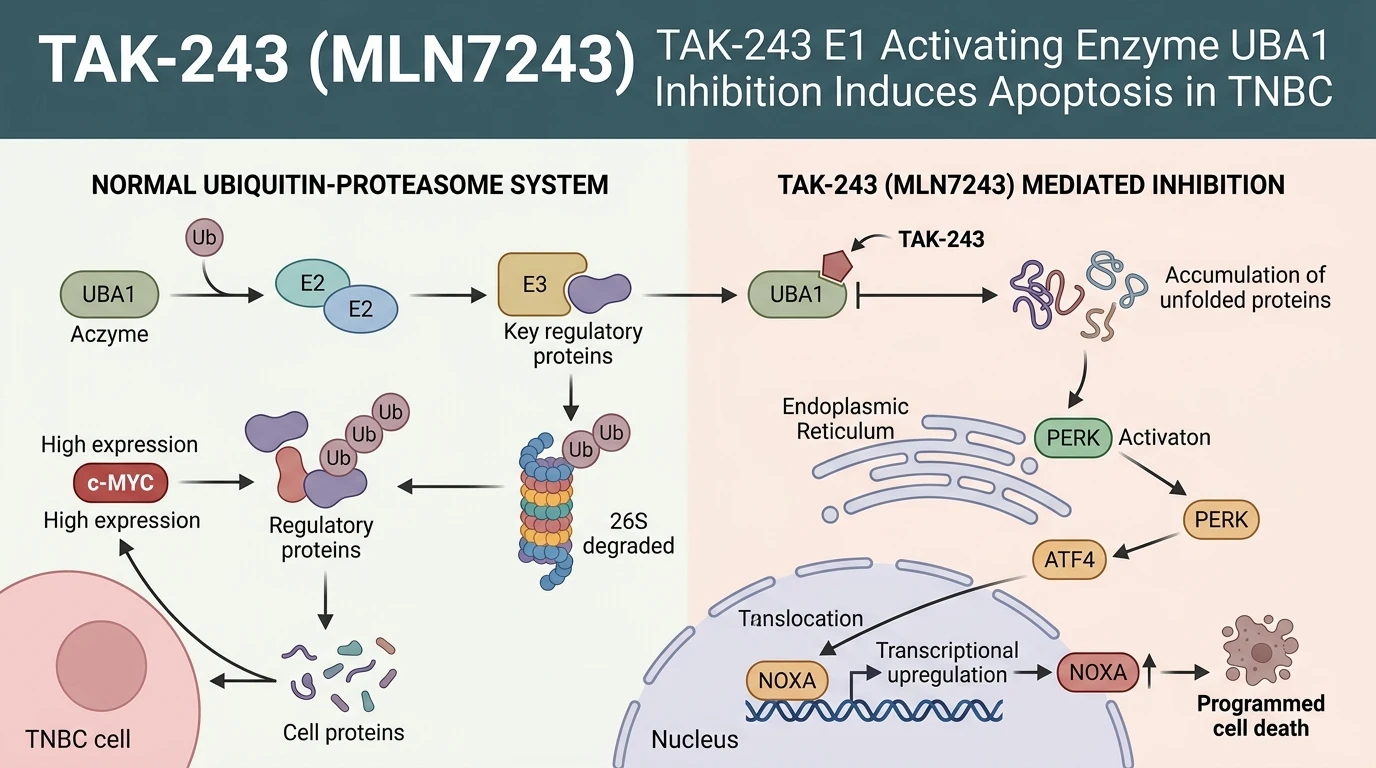
Triple-negative breast cancer (TNBC) represents a heterogenous, clinically aggressive subtype defined by the absence of estrogen receptor, progesterone receptor, and HER2 amplification. Systematic loss-of-function functional genomic screening across diverse breast cancer cell lines identified ubiquitin-like modifier activating enzyme 1 (UBA1) as an essential metabolic vulnerability. As the apex enzyme initiating the ubiquitin-proteasome cascade, UBA1 catalyzes the ATP-dependent adenylation of the ubiquitin C-terminus, forming a high-energy thioester bond with a conserved active-site cysteine residue. Activated ubiquitin is subsequently transferred to a panel of E2 conjugating enzymes, which collaborate with E3 ubiquitin ligases to modify substrate proteins. Disruption at this initial step halts all downstream canonical ubiquitin conjugation events across the cell.
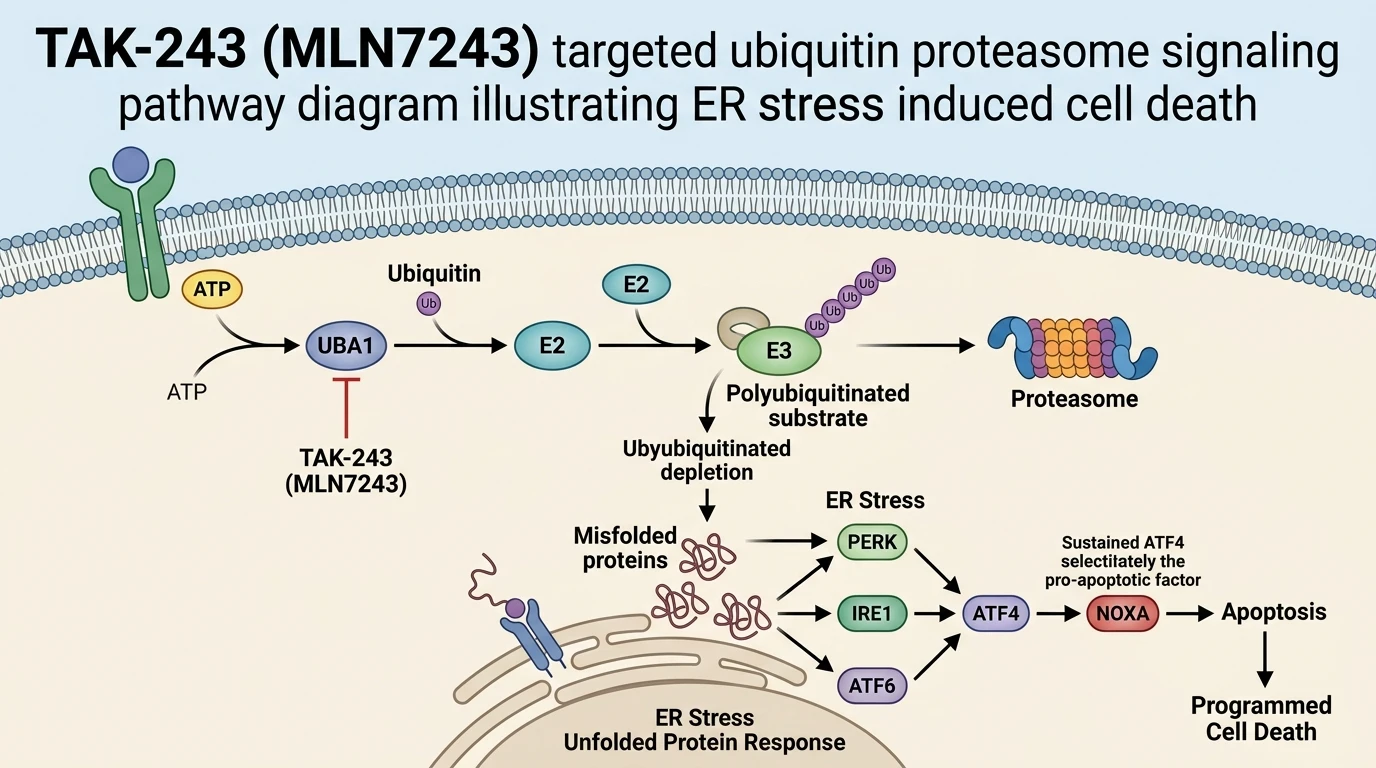
Small-molecule inhibition using TAK-243 (MLN7243) provides a direct mechanism to target this fundamental post-translational machinery. Mechanistic characterization shows that TAK-243 forms an adduct with ubiquitin within the catalytic pocket of UBA1, mimicking the ubiquitin-adenylate transition state and competitively blocking ATP engagement. Through this mechanism, TAK-243 E1 Activating enzyme blockade rapidly depletes intracellular pools of unattached, free ubiquitin. Within hours of exposure, cellular polyubiquitination cascades drop to undetectable levels, disrupting essential ubiquitin-dependent processes including proteasomal clearance, DNA damage repair pathways, and kinase activation loops.
Unprocessed misfolded proteins accumulate within the lumen of the endoplasmic reticulum (ER), creating severe proteotoxic stress. Under standard physiological conditions, cells resolve proteotoxic burdens through activation of the unfolded protein response (UPR), mediated by three primary transmembrane ER sensors: PERK, IRE1α, and ATF6. In the presence of sustained UBA1 inhibition by TAK-243, this homeostatic adaptive response fails to restore proteostasis and shifts toward terminal pro-apoptotic signaling. Active PERK phosphorylates eukaryotic initiation factor 2 alpha (eIF2α), suppressing global mRNA translation while selectively enhancing translation of activating transcription factor 4 (ATF4).
Elevated nuclear ATF4 directly drives transcription of specific pro-apoptotic effectors, most prominently the BH3-only protein NOXA. Increased NOXA protein levels neutralize anti-apoptotic BCL-2 family members such as MCL-1, promoting BAK/BAX-dependent mitochondrial outer membrane permeabilization (MOMP), cytochrome c release into the cytosol, and activation of executioner caspases-3 and -7. This signaling pathway connects acute ubiquitin depletion directly to intrinsic apoptotic cell death.
Cellular sensitivity to TAK-243-mediated UBA1 inhibition exhibits strong positive correlation with baseline c-MYC expression levels. The c-MYC proto-oncogene drives elevated rates of ribosome biogenesis, global protein translation, and cellular metabolic output. Consequently, c-MYC-high TNBC cells operate under continuous baseline proteotoxic pressure, rendering them highly dependent on intact UBA1 activity for proteostasis maintenance. In these elevated c-MYC contexts, TAK-243 treatment triggers amplified ATF4 expression and accelerated NOXA accumulation, resulting in significantly lower median lethal concentrations compared to non-transformed mammary tissue controls.
In vivo evaluation utilizing patient-derived xenograft (PDX) mouse models demonstrates substantial antitumor activity upon systemic administration of TAK-243. Dosing schedules achieved sustained regression of primary mammary fat pad tumors and significantly reduced secondary pulmonary metastatic lesions. Pharmacodynamic analysis of tumor biopsies confirmed target engagement, evidenced by widespread depletion of polyubiquitinated proteins and robust induction of NOXA expression. Crucially, normal tissue-derived cells exhibited minimal toxicity at therapeutic exposure levels, confirming that oncogene-driven proteotoxic stress creates a distinct functional vulnerability that can be exploited by targeting UBA1.
Furthermore, structural analyses of UBA1 target engagement demonstrate high selectivity over related E1 activating enzymes, such as NAE (NEDD8-activating enzyme) and SAE (SUMO-activating enzyme). This target selectivity ensures that cellular toxicity arises specifically from ubiquitin pool exhaustion rather than pan-E1 inhibition. Quantitative mass spectrometry profiling confirms that ubiquitin-protein conjugations decline exponentially, whereas SUMOylation and NEDDylation dynamics remain comparatively unaffected at low nanomolar concentrations of TAK-243. These biochemical observations establish UBA1 as a distinct structural and functional target within the broader ubiquitin-like modification enzyme family.
Pharmacological Characterization and Antitumor Efficacy in TNBC
Copy code to add this image to your page
TAK-243 (MLN7243) is a first-in-class small molecule inhibitor targeting UBA1, the primary E1 activating enzyme of the ubiquitin cascade. By blocking ubiquitin adenylation, TAK-243 depletes cellular ubiquitin pools, arresting proteasomal clearance and causing severe endoplasmic reticulum stress. This activates the PERK branch of the unfolded protein response, leading to ATF4-dependent transcriptional upregulation of pro-apoptotic NOXA. Tumors with elevated c-MYC expression display heightened sensitivity due to baseline proteotoxic stress, enabling TAK-243 to drive selective apoptosis and tumor regression in preclinical triple-negative breast cancer models.
UBA1 Adenylation Blockade Triggers Proteotoxic ER Stress
Disruption of ubiquitin activation by TAK-243 (MLN7243) alters cellular protein turnover rapidly. Biochemical assays using purified recombinant UBA1 demonstrated sub-nanomolar potency, where the inhibitor competes with ATP to freeze the enzyme in an inactive complex. TAK-243 E1 Activating enzyme binding halts ubiquitin thioester formation. Ubiquitin charging onto downstream E2 conjugating enzymes ceased within thirty minutes in treated cell lines. Polyubiquitinated substrate accumulation abruptly halted; concurrently, un-ubiquitinated cellular proteins accumulated within the cytosol and endoplasmic reticulum. This sudden loss of proteasomal clearance capacity induced severe ER stress in patient-derived TNBC models. Transmembrane stress sensors PERK and IRE1α underwent immediate auto-phosphorylation. Active PERK selectively increased translation of activating transcription factor 4 (ATF4). In this cellular setting, elevated ATF4 directly stimulated transcription of the pro-apoptotic factor NOXA, triggering cytochrome c release and caspase-3 activation.
c-MYC Overexpression Sensitizes TNBC Models to UBA1 Inhibition
Genomic stratification across breast cancer cell lines revealed a clear correlation between c-MYC abundance and drug sensitivity. High c-MYC expression elevated baseline protein synthesis rates—a state that amplifies reliance on ubiquitin-mediated quality control. In cell line panels possessing c-MYC amplification, TAK-243 treatment caused hyper-induction of the ATF4/NOXA pathway. Non-transformed human mammary epithelial cells maintained protein homeostasis under identical dosing schedules. Within murine xenograft models bearing c-MYC-high TNBC tumors, twice-weekly administration of TAK-243 suppressed tumor growth markedly. Tumor regressions were observed across several PDX lines without severe systemic body weight loss in the host animals. Immunoblot analyses of excised xenograft tissue confirmed target engagement via sustained suppression of ubiquitin-protein conjugates. Pharmacodynamic measurements indicated that peak intratumoral drug concentrations exceeded the threshold required for sustained UBA1 inhibition. These experimental observations demonstrate that c-MYC status serves as a predictive biomarker for TAK-243 E1 Activating enzyme targeted therapy in preclinical TNBC models.