c-RET Inhibitors
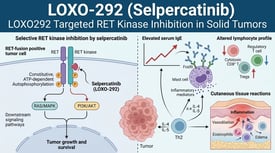
The rearranged during transfection (RET) receptor tyrosine kinase is a crucial cell surface receptor involved in cell growth, differentiation, and survival, particularly important in the development of the enteric nervous system and kidneys. Under normal physiological conditions, RET activation occurs upon binding of glial cell line-derived neurotrophic factor (GDNF) family ligands, which recruit co-receptors (GFRα) to induce RET dimerization and autophosphorylation. This initiates downstream signaling cascades, including the RAS/MAPK, PI3K/AKT, and PLCγ pathways, which regulate gene expression and cellular processes. However, aberrant activation of RET, primarily through oncogenic fusions or activating point mutations, transforms it into a potent oncogene, driving uncontrolled cell proliferation and survival in various cancers. The mechanism of action of RET inhibitors involves blocking the kinase activity of the mutated or fused RET protein, thereby disrupting the constitutive downstream signaling and inhibiting tumor growth. Diseases strongly associated with RET alterations include medullary thyroid cancer (MTC), where germline or somatic RET point mutations (e.g., M918T, C634R) are found in nearly all hereditary and a significant portion of sporadic cases. RET gene fusions (e.g., CCDC6-RET, KIF5B-RET) are also identified as oncogenic drivers in a subset of non-small cell lung cancer (NSCLC), papillary thyroid cancer, and other rare tumors.
These genetic alterations lead to ligand-independent activation of RET, making it an attractive therapeutic target. The research progress and status of RET inhibitors have seen significant advancements, particularly with the development of highly selective agents. Early multi-kinase inhibitors, such as cabozantinib and vandetanib, which possess RET inhibitory activity alongside other targets (e.g., VEGFR, MET), were approved for MTC. While effective, their broad target profiles led to considerable off-target toxicities. A major breakthrough came with the approval of highly selective RET inhibitors, selpercatinib and pralsetinib, in 2020. These next-generation inhibitors demonstrated unprecedented response rates and durability in patients with RET fusion-positive NSCLC and RET-mutant MTC, with significantly improved safety profiles compared to earlier multi-kinase inhibitors. Both drugs are now approved for these indications, and clinical trials are ongoing to explore their efficacy in other RET-driven cancers and in combination with other therapies.
Preclinical research is focused on understanding resistance mechanisms and developing even more potent and selective compounds. RET inhibitors can be broadly classified into multi-kinase inhibitors with RET activity (e.g., cabozantinib, vandetanib) and highly selective, next-generation RET inhibitors (e.g., selpercatinib, pralsetinib). The latter represent a significant advance due to their improved specificity, which translates to better tolerability and reduced off-target effects. These are all small molecule tyrosine kinase inhibitors, designed to bind to the ATP-binding pocket of the RET kinase domain. Other relevant general knowledge includes the critical importance of molecular testing to identify RET fusions or mutations in patients, as these inhibitors are effective only in patients whose tumors harbor these specific genetic alterations. Acquired resistance to RET inhibitors can emerge through on-target secondary mutations (e.g., RET G810R/S/C) or activation of bypass signaling pathways, necessitating the development of third-generation inhibitors or combination strategies. Common side effects with selective RET inhibitors are generally manageable but can include hypertension, fatigue, and liver enzyme elevations.
Research tools include specific antibodies for RET protein detection and various cell lines with RET alterations. The success of selective RET inhibitors highlights the power of precision oncology in targeting specific oncogenic drivers.