SGC-CBP30 Inhibition of CREBBP EP300 Bromodomains Suppresses Myofibroblast Fibrotic Gene Networks
Copy code to add this image to your page
Chromatin remodeling complexes govern persistent myofibroblast activation in chronic fibrotic conditions. Epigenetic readers, particularly bromodomain and extra-terminal domain (BET) proteins as well as non-BET acetyltransferases, coordinate histone acetylation states with active RNA polymerase II elongation. Among these epigenetic regulators, CREB-binding protein (CREBBP) and E1A binding protein p300 (EP300) act as dual functional transcriptional coactivators possessing intrinsic histone acetyltransferase (HAT) catalytic activity alongside highly conserved bromodomains. These bromodomains serve as molecular acetyl-lysine readers that anchor coactivator complexes to localized chromatin loci. In pathological fibrotic tissue states, such as primary palmar fascia myofibroblasts isolated from Dupuytren's disease specimens, persistent transcriptional activation of extracellular matrix (ECM) components drives progressive tissue contraction and stiffness.
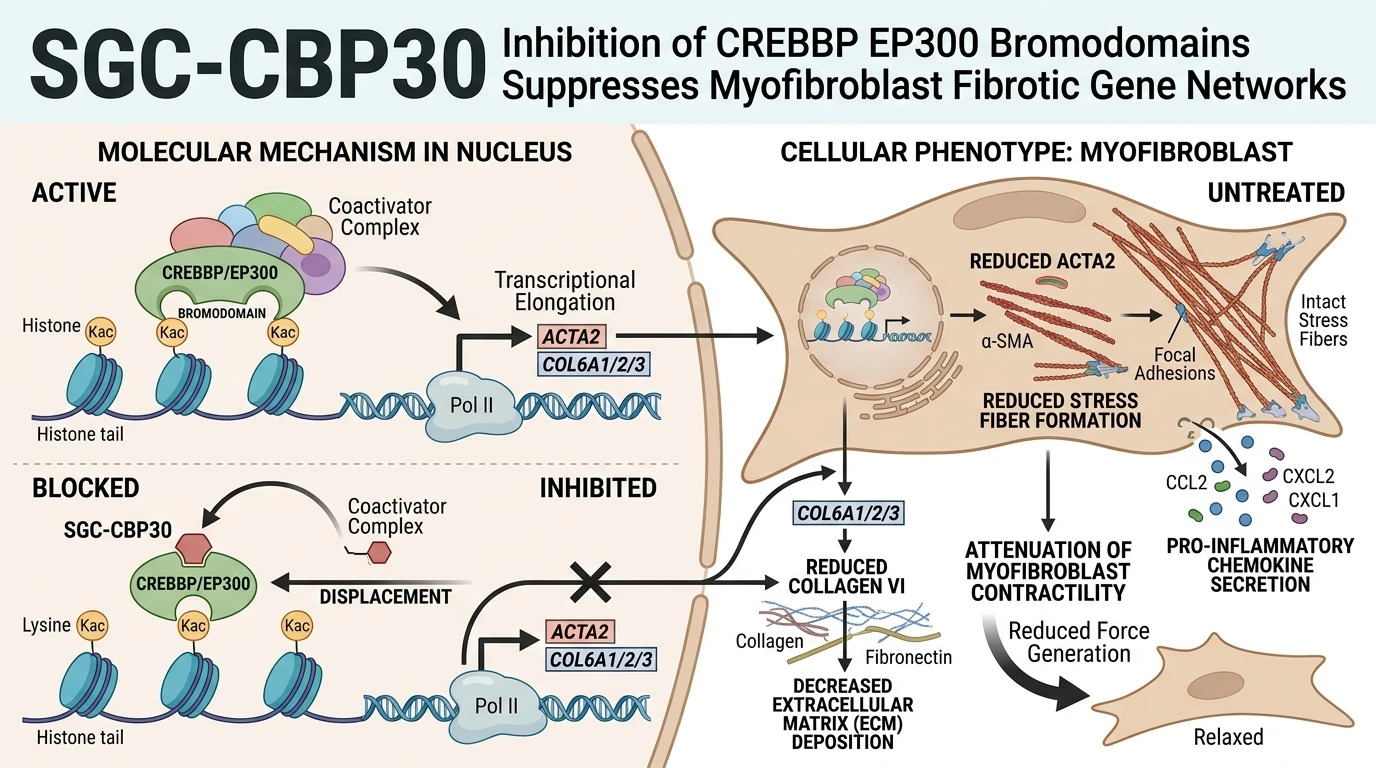
SGC-CBP30 is a potent, highly selective small-molecule bromodomain inhibitor engineered to target the bromodomains of CREBBP and EP300 over other bromodomain families. Structural characterization shows that CREBBP/EP300 bromodomain targeting by SGC-CBP30 competitively displaces the acetyl-lysine binding pocket with nanomolar binding affinity. This physical displacement prevents coactivator recruitment to super-enhancers and promoter regions controlling core fibrogenic transcription factors and structural matrix proteins.
In primary human myofibroblast cultures, pharmacological intervention with SGC-CBP30 produces a distinct, dose-dependent down-regulation of primary fibrotic marker genes. Most prominently, transcript levels for ACTA2 (encoding alpha-smooth muscle actin, α-SMA) decline markedly following compound exposure. Reduced α-SMA expression correlates with attenuation of contractile stress fiber assembly, altering myofibroblast morphology from a spread, contractile phenotype toward a quiescent phenotype. Simultaneously, SGC-CBP30 potently suppresses major fibrillar and microfibrillar collagen transcripts. Expression of COL1A1 is significantly diminished, as are the genes encoding all three alpha chains of collagen VI: COL6A1, COL6A2, and COL6A3.
Collagen VI is a critical microfibrillar matrix molecule that anchors cell membranes to the interstitial matrix; its dysregulation initiates pathogenic tissue remodeling and mechanical signaling loops. By specifically suppressing COL6A1/2/3 transcript expression alongside fibrillar collagens, SGC-CBP30 disrupts the structural matrix architecture that sustains myofibroblast tension. Furthermore, target engagement by SGC-CBP30 attenuates the local secretome, reducing pro-inflammatory chemokine release and autocrine profibrotic loops in tested cell populations. These coordinated pharmacodynamic responses confirm that CREBBP and EP300 bromodomains act as indispensable epigenetic hubs for fibrotic gene transcription.
Crucially, the functional selectivity of SGC-CBP30 over classical BET bromodomains (such as BRD4) provides a refined experimental tool to isolate HAT-bromodomain-specific transcription from broader transcriptional elongation arrest. In cellular models derived from fibrotic tissue, dose-response studies reveal that transcript suppression occurs at sub-micromolar concentrations without inducing immediate generalized cytotoxicity. The selective loss of acetylation-dependent coactivator assembly at specific promoter sites—rather than systemic transcript ablation—underlines the targeted biological activity of this chemical probe. Experimental evaluation across patient-derived cell models confirms that interfering with CREBBP/EP300 acetyl-lysine recognition halts the transcript accumulation required for matrix deposition, establishing a clear mechanistic link between bromodomain engagement and structural matrix normalization.
Pharmacodynamic Characterization and Transcriptional Regulation in Myofibroblasts
Copy code to add this image to your page
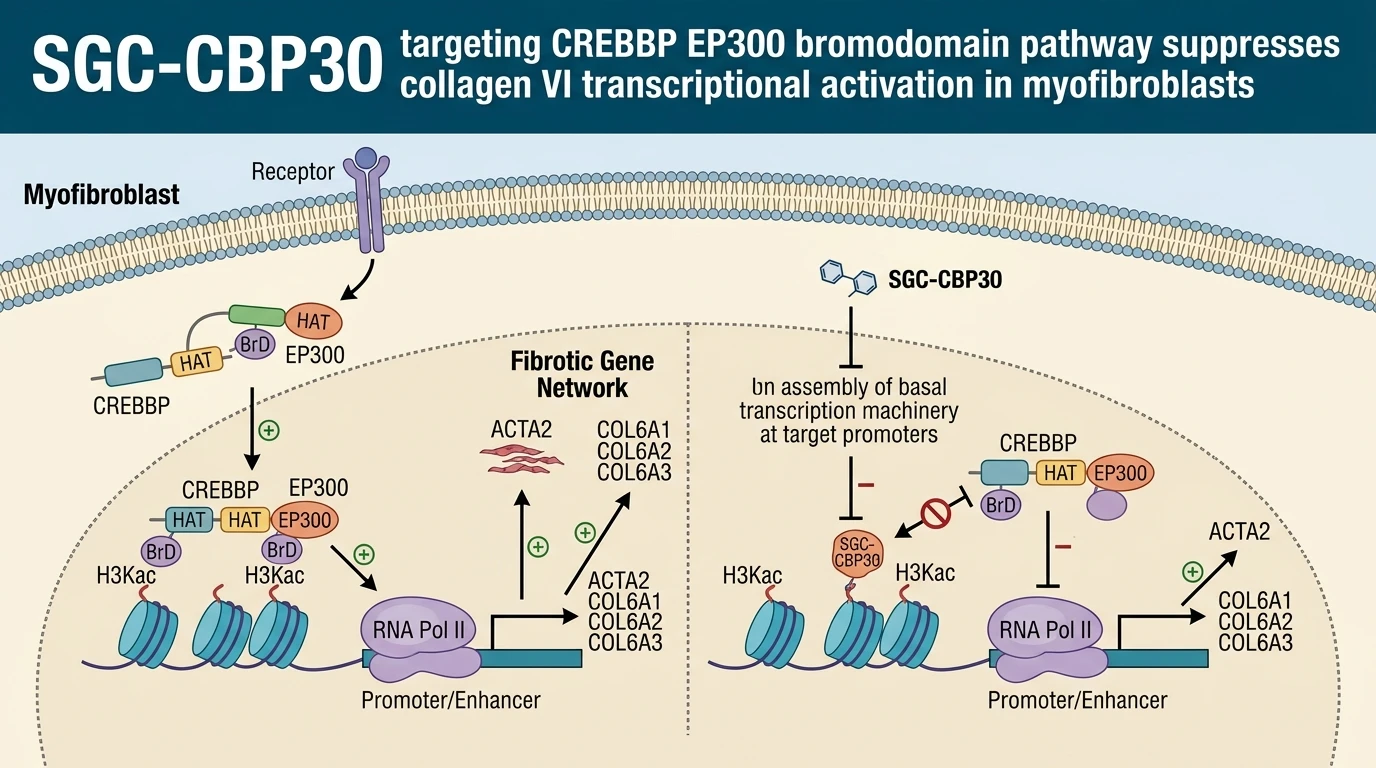
SGC-CBP30 selectively inhibits CREBBP and EP300 bromodomains, disrupting acetyl-lysine binding and preventing transcriptional coactivator recruitment to fibrotic gene promoters. In primary myofibroblasts, this targeted inhibition suppresses transcript levels of ACTA2 (α-SMA), COL1A1, and collagen VI chains (COL6A1/2/3). Reduced collagen and α-SMA expression impairs stress fiber formation, alters cell morphology, and decreases pro-inflammatory chemokine release, thereby attenuating pathological tissue remodeling.
Suppression of ACTA2 and Fibrillar Collagen Gene Transcription
Inhibition of CREBBP/EP300 bromodomains by SGC-CBP30 alters the transcriptional machinery in Dupuytren's disease myofibroblasts. Treatment at nanomolar to low micromolar concentrations causes a dose-dependent reduction in ACTA2 mRNA levels. Downstream α-SMA protein expression drops correspondingly within 48 hours. This loss of α-SMA disrupts internal stress fiber organization; consequently, cellular contractility declines significantly in collagen gel contraction assays. Simultaneously, transcription of COL1A1 is suppressed under tested in vitro conditions. These combined molecular alterations indicate that displacement of CREBBP and EP300 directly uncouples promoter-bound transcriptional complexes from active transcription of structural matrix components.
Downregulation of Collagen VI Microfibril Chains and Chemokine Release
The microfibrillar network composed of collagen VI α1, α2, and α3 chains provides mechanical stabilization to fibrotic tissues. SGC-CBP30 exposure leads to coordinated downregulation of COL6A1, COL6A2, and COL6A3 transcripts in primary myofibroblast models. Microfibril assembly within the extracellular matrix drops significantly. Morphological analysis confirms a transition toward a non-contractile cellular phenotype. Beyond structural proteins, inflammatory signaling is altered—SGC-CBP30 attenuates the release of pro-inflammatory chemokines, including CCL2 and IL-6, into the culture supernatant. The selectivity margin between fibrotic gene suppression and generalized transcriptional toxicity remains stable within physiologically relevant concentrations. These empirical metrics establish that targeted CREBBP/EP300 bromodomain blockade disrupts both structural matrix assembly and inflammatory feedback signals.