ATM/ATR Inhibitors
Ataxia-telangiectasia mutated (ATM) and ATM-and Rad3-related (ATR) are two master regulatory kinases that coordinate the cellular response to DNA damage and replication stress. While they share structural similarities as members of the PI3K-related kinase (PIKK) family, they have distinct roles. ATM is primarily activated by DNA double-strand breaks (DSBs) and signals through downstream targets like Chk2 and p53 to induce cell cycle arrest and DNA repair. ATR, on the other hand, is activated by single-stranded DNA (ssDNA) gaps that occur at stalled replication forks or during the processing of DSBs, signaling through Chk1 to stabilize replication forks and prevent premature entry into mitosis. Dysregulation of these pathways is a common feature of cancer, and many tumors harbor mutations in ATM or other DNA damage response (DDR) genes, making them highly dependent on the remaining ATR-mediated signaling for survival.
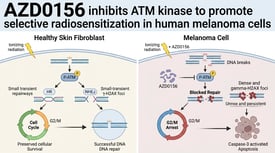
This dependency forms the basis for synthetic lethality strategies. ATM and ATR inhibitors are being extensively developed as anti-cancer agents, particularly for use in combination with DNA-damaging chemotherapy, radiotherapy, or PARP inhibitors. Several ATR inhibitors, such as berzosertib (M6620), ceralasertib (AZD6738), and elimusertib (BAY 1895344), have entered clinical trials and shown promising activity in patients with advanced solid tumors. ATM inhibitors, such as peposertib and others like AZD0156, are also being evaluated, often in combination with agents that induce DSBs. These inhibitors are typically classified as selective ATP-competitive small molecules.
A major challenge in the clinical development of these inhibitors is managing hematological toxicities, such as neutropenia and anemia, which can be exacerbated when combined with traditional chemotherapy. Identifying predictive biomarkers, such as ATM loss or ARID1A mutations, is crucial for selecting patients who will benefit most from ATR inhibition via synthetic lethality. Furthermore, there is growing interest in the role of ATM/ATR signaling in the immune response; inhibition of these kinases can lead to the accumulation of cytosolic DNA and activation of the cGAS-STING pathway, potentially enhancing the efficacy of immunotherapy. Research tool compounds like caffeine (a weak inhibitor) and VE-821 have been instrumental in early mechanistic studies. As the field of DDR-targeted therapy matures, ATM and ATR inhibitors represent a frontier in precision oncology, offering the potential to exploit specific genomic vulnerabilities in cancer cells while sparing normal tissue through carefully designed combination regimens and biomarker-driven patient selection.