SB 225002 from Selleck inhibits CXCR2 to overcome macrophage-mediated ibrutinib resistance in MCL
Copy code to add this image to your page
Mantle cell lymphoma (MCL) remains an aggressive B-cell malignancy characterized by frequent relapses following standard chemoimmunotherapy regimens. The introduction of Bruton's tyrosine kinase (BTK) inhibitors, such as ibrutinib, represented a major clinical shift in managing relapsed or refractory MCL. However, primary and acquired therapeutic resistance to ibrutinib poses a persistent challenge in clinical oncology. While resistance frequently stems from point mutations in the BTK active site (such as C481S), non-cell-autonomous mechanisms mediated by the tumor microenvironment play an equally critical role in fostering drug tolerance.
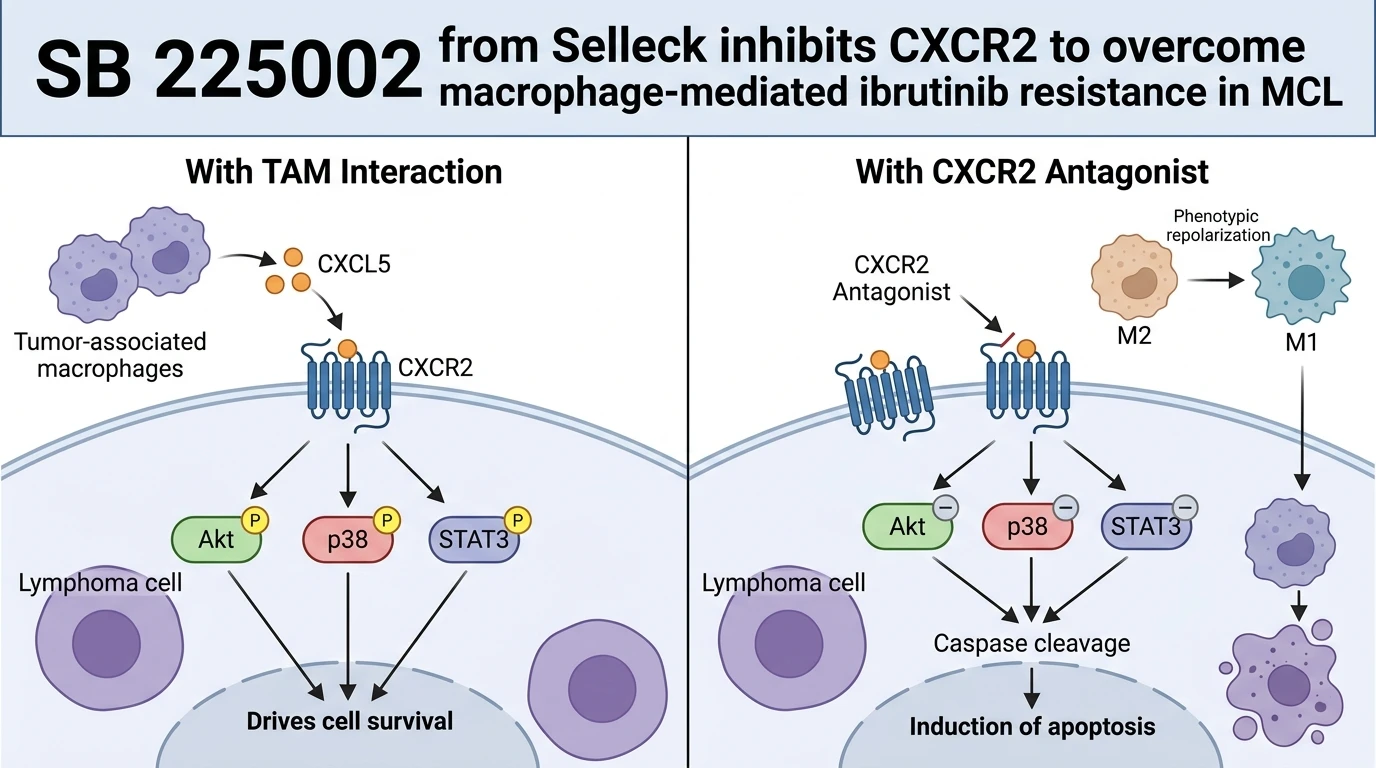
Lymphoma-associated macrophages (LAMs) represent a dominant cellular component of the MCL microenvironmental niche. Under tumor-derived factors, these infiltrating macrophages undergo polarization into an M2-like immunosuppressive phenotype. Phenotypically polarized M2 LAMs continuously secrete elevated levels of the CXC-motif chemokine CXCL5. Malignant MCL cells constitutively express CXCR2, a seven-transmembrane G-protein-coupled receptor that acts as the high-affinity receptor for CXCL5. Paracrine CXCL5 binding to CXCR2 on MCL cells triggers receptor dimerization and intracellular signal transduction.
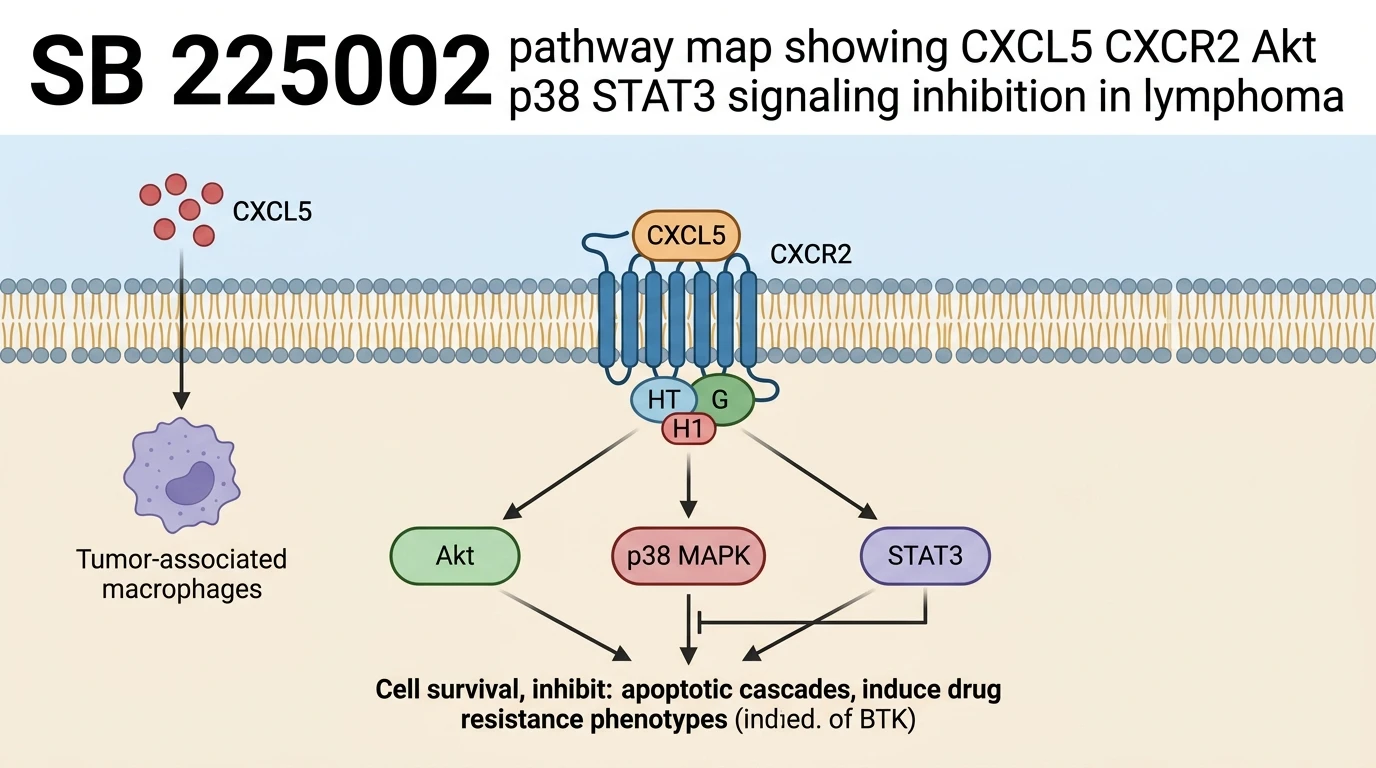
Ligation of CXCR2 by macrophage-derived CXCL5 activates three major downstream signaling axes: Akt, p38 mitogen-activated protein kinase (MAPK), and signal transducer and activator of transcription 3 (STAT3). Phosphorylation of Akt activates anti-apoptotic signaling cascades, upregulating survival proteins such as Bcl-2 and Mcl-1 while inactivating pro-apoptotic Bad. Simultaneously, p38 MAPK phosphorylation drives transcriptomic programs that favor cellular proliferation and stress tolerance. Activation of STAT3 facilitates nuclear translocation and transcription of target genes associated with cell survival and drug resistance. Crucially, this tripartite activation cascade operates independently of canonical BTK receptor signaling, enabling MCL cells to maintain survival networks even in the presence of saturating concentrations of ibrutinib.
Targeting this paracrine signaling bridge requires potent and selective pharmacological intervention. SB 225002 functions as a selective non-peptide antagonist of CXCR2. By competitive occupancy of the CXCR2 extracellular binding domain, SB 225002 prevents CXCL5-induced receptor activation. In experimental models utilizing co-cultures of primary MCL cells and M2 polarized macrophages, application of SB 225002 from Selleck disrupted ligand-induced receptor phosphorylation. Consequently, downstream activation of Akt, p38, and STAT3 ceased, re-sensitizing MCL cells to BTK inhibition.
In addition to blocking direct pro-survival signaling in malignant B cells, targeted CXCR2 inhibition modifies the cellular composition of the microenvironment itself. Exposure to SB 225002 prompts functional repolarization of co-cultured M2-like LAMs toward an M1-like pro-inflammatory phenotype. This phenotypic shift is marked by reduced expression of CD206 and decreased secretion of protumorigenic cytokines, combined with an elevation in M1 markers such as CD86 and inducible nitric oxide synthase (iNOS). Repolarized M1 macrophages lose their capacity to confer ibrutinib resistance, turning the microenvironment from a protective sanctuary into an antitumor domain.
Preclinical evaluations in murine xenograft models bearing ibrutinib-resistant MCL tumors confirm the therapeutic relevance of this mechanism. Combined administration of SB 225002 and ibrutinib leads to marked tumor regression, increased cleavage of poly(ADP-ribose) polymerase (PARP), and extensive intratumoral apoptosis compared to either monotherapy. Importantly, these effects occur at physiologically relevant concentrations without causing overt systemic toxicity or weight loss in treated animals.
Pharmacological Target Validation and Preclinical Efficacy Analysis
Copy code to add this image to your page
SB 225002 acts as a selective antagonist of CXCR2, blocking the binding of macrophage-secreted CXCL5. This receptor inhibition shuts down downstream Akt, p38 MAPK, and STAT3 signaling cascades in mantle cell lymphoma cells, bypassing BTK-independent resistance mechanisms. Consequently, CXCR2 blockade restores ibrutinib sensitivity, triggers apoptosis, and reprograms pro-tumorigenic M2 macrophages toward an M1 phenotype.
CXCL5 Driven CXCR2 Activation Mediates BTK Independent Resistance
M2-polarized macrophages release CXCL5 into the local microenvironment. Paracrine engagement of CXCR2 drives robust activation of Akt, p38, and STAT3 cascades in mantle cell lymphoma cells. Cellular viability remained high despite BTK inhibition. Under tested in vitro assay conditions, this signaling network bypassed classical ibrutinib target blockade entirely. Quantitative immunoblotting confirmed sustained target phosphorylation across multiple resistant cell lines.
SB 225002 Restores Apoptosis and Synergizes With Ibrutinib
Selective CXCR2 blockade disrupts paracrine survival pathways. Treatment with SB 225002 from Selleck abrogated ligand-induced receptor phosphorylation within hours. Downstream Akt and STAT3 activation decreased sharply. Consequently, co-treatment with ibrutinib restored cleavage of caspase-3 and PARP—initiating widespread apoptotic death in patient-derived lymphoma cells. The calculated combination index indicated strong synergistic efficacy across tested dosing schedules.
Macrophage Repolarization Suppresses Tumor Growth in Xenograft Models
CXCR2 inhibition alters cellular phenotype within the tumor niche. In this murine xenograft model, systemic administration of SB 225002 effectively suppressed lymphoma growth. Histological analysis revealed a significant shift in macrophage polarization markers; CD206 expression decreased while CD86 expression rose markedly. Microvessel density within harvested tumor tissues dropped significantly following combination therapy. These observations suggest dual efficacy against both malignant cells and supporting stromal elements.