Akt Inhibitors
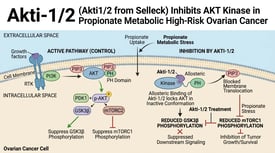
Akt, also known as protein kinase B (PKB), is a central node in the PI3K/Akt/mTOR signaling pathway and plays a pivotal role in regulating diverse cellular functions, including glucose metabolism, apoptosis, cell cycle progression, and proliferation. There are three closely related isoforms of Akt in mammals: Akt1, Akt2, and Akt3, which exhibit high sequence homology but distinct physiological roles. The activation of Akt is a multi-step process initiated by the recruitment of the kinase to the plasma membrane via its pleckstrin homology (PH) domain, where it binds to PIP3. Subsequent phosphorylation by PDK1 at Thr308 and by mTORC2 at Ser473 is required for full catalytic activity. Hyperactivation of Akt is frequently observed in a wide range of human cancers, such as breast, prostate, and ovarian cancers, often due to PTEN loss or PIK3CA mutations.
It is also a key factor in insulin resistance and type 2 diabetes. The development of Akt inhibitors has been a major focus of oncology research for decades. Current clinical progress has reached a significant milestone with the recent approval of capivasertib, an ATP-competitive Akt inhibitor, for use in specific breast cancer populations. Other candidates, such as ipatasertib, have shown efficacy in late-stage clinical trials. Akt inhibitors are generally classified into two main types: ATP-competitive inhibitors and allosteric inhibitors.
ATP-competitive inhibitors bind to the kinase's catalytic site, while allosteric inhibitors, such as MK-2206, bind to the interface between the PH and kinase domains, preventing the membrane translocation and subsequent activation of the enzyme. Allosteric inhibitors often provide better selectivity between isoforms but have faced challenges regarding potency and metabolic stability. One of the primary challenges in targeting Akt is the narrow therapeutic index, as systemic inhibition often leads to significant metabolic side effects, most notably hyperglycemia and hyperinsulinemia, due to Akt's essential role in insulin signaling. Resistance to Akt inhibition can also occur through the upregulation of parallel pathways like the SGK kinase family or through feedback loops that reactivate upstream signaling. Combination strategies, particularly with endocrine therapies or other PI3K pathway inhibitors, are being extensively studied to enhance the clinical benefit.
Research tool compounds like Perifosine have been instrumental in early studies, though they lacked the specificity of modern agents. As the field moves forward, the focus is on identifying specific patient populations through molecular profiling and developing isoform-selective inhibitors that can minimize metabolic toxicity while effectively suppressing tumor growth.