Erlotinib (CP-358774) Erlotinib Evaluation in Advanced Sorafenib-Refractory Hepatocellular Carcinoma
Copy code to add this image to your page
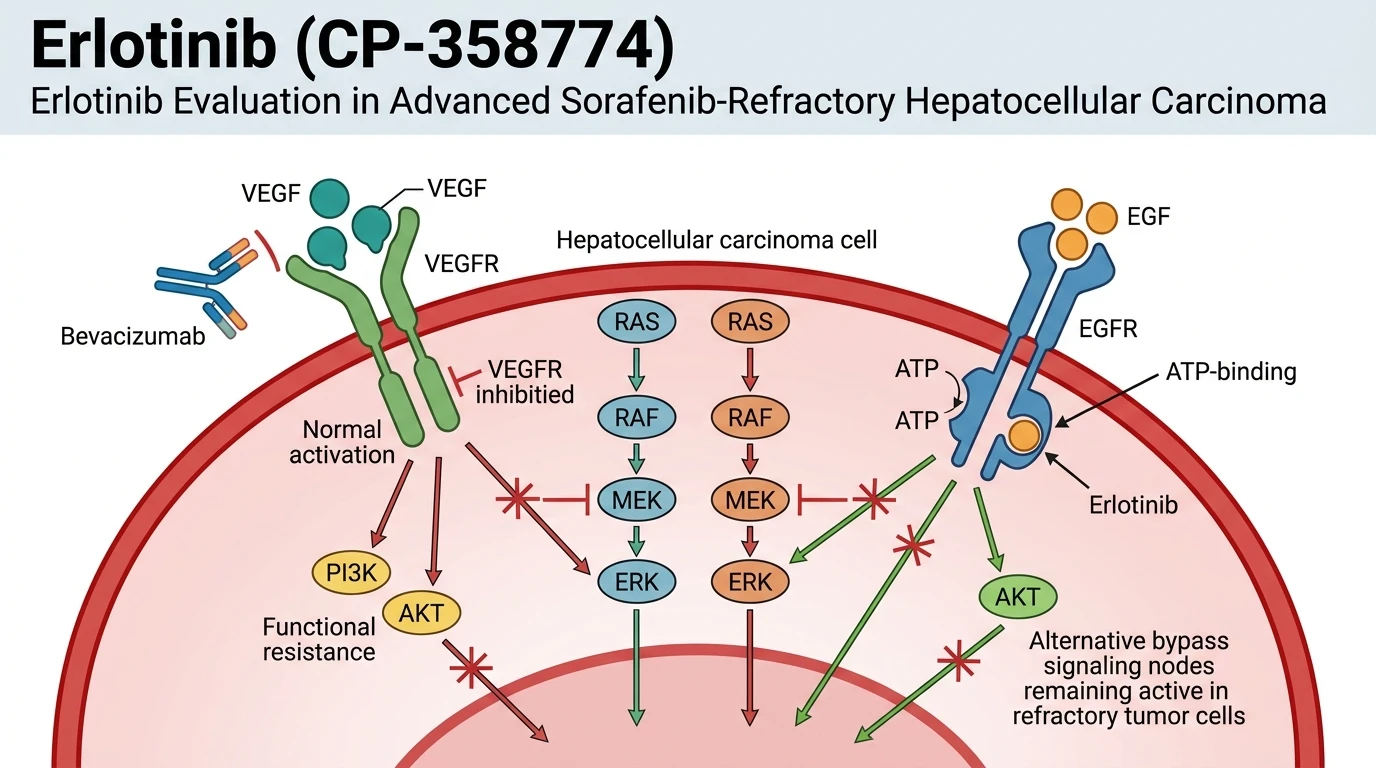
In advanced hepatocellular carcinoma (HCC), therapeutic options following first-line systemic failure remain clinically challenging. Sorafenib, a multi-kinase inhibitor targeting vascular endothelial growth factor receptors (VEGFR), platelet-derived growth factor receptors (PDGFR), and RAF kinases, long represented the standard first-line intervention. However, acquired resistance inevitably develops, prompting investigation into secondary therapeutic combinations targeting parallel angiogenic and oncogenic driver cascades. The dual inhibition strategy coupling bevacizumab, a monoclonal antibody directed against VEGF-A, with Erlotinib (CP-358774), an orally active small-molecule inhibitor of the epidermal growth factor receptor (EGFR) tyrosine kinase domain, was hypothesized to suppress compensatory tumor survival mechanisms.
In this open-label, single-arm phase II trial, investigators evaluated the combination of bevacizumab and Erlotinib in a patient cohort with advanced, histologically confirmed hepatocellular carcinoma who had previously failed or progressed on sorafenib therapy. The dosing regimen comprised intravenous bevacizumab administered at 10 mg/kg every two weeks alongside daily oral Erlotinib at a dose of 150 mg. Ten patients were enrolled in the initial stage of the study design. The clinical protocol specified a two-stage Simon design to assess the overall response rate (ORR) and clinical benefit rate (CBR), defined as the sum of complete responses, partial responses, and stable disease maintained for at least eight weeks.
Empirical evaluation of the patient cohort revealed a total absence of therapeutic activity. Zero patients achieved a complete or partial objective response, and zero patients maintained stable disease under response evaluation criteria in solid tumors (RECIST). Consequently, both the overall response rate and the clinical benefit rate were 0%. The median time-to-progression (TTP) was documented at 1.81 months (95% CI: 1.0–2.6 months), while the median overall survival (OS) reached 4.37 months (95% CI: 2.1–6.6 months). In accordance with the pre-specified interim statistical stopping rules, the trial was terminated early at the conclusion of the first stage due to clear futility and lack of clinical activity.
Pharmacodynamic monitoring and safety assessments indicated that the combination regimen possessed a predictable, manageable toxicity profile. The observed adverse events were consistent with established single-agent side-effect spectrums. Low-to-moderate grade dermatologic toxicities, primarily papulopustular acneiform rash, occurred in the majority of patients. Gastrointestinal side effects, predominantly grade 1 or 2 diarrhea, were similarly recorded. No unexpected fatal toxicities or additive adverse synergistic effects were observed. The presence of cutaneous rash confirmed systemic target exposure and pharmacodynamic engagement of cutaneous EGFR by Erlotinib, yet this biochemical inhibition did not translate into tumor regression or growth stabilization.
The complete failure of dual VEGF and EGFR blockade in this setting highlights major biological boundaries in unselected HCC populations. Tumor progression following sorafenib therapy reflects complex multi-pathway rewiring. In unselected patient cohorts lacking predictive biomarkers—such as specific EGFR gene amplifications or activating mutations—the tumor microenvironment relies on non-EGFR dependent signaling vectors. Secondary driver networks, including MET activation, fibroblast growth factor receptor (FGFR) signaling, and AXL axis upregulation, effectively bypass isolated EGFR kinase inhibition. Consequently, concomitant administration of bevacizumab and Erlotinib fails to alter tumor kinetics in unselected sorafenib-refractory advanced hepatocellular carcinoma.
Pharmacodynamic Outcomes and Clinical Efficacy in Sorafenib-Refractory HCC
Copy code to add this image to your page
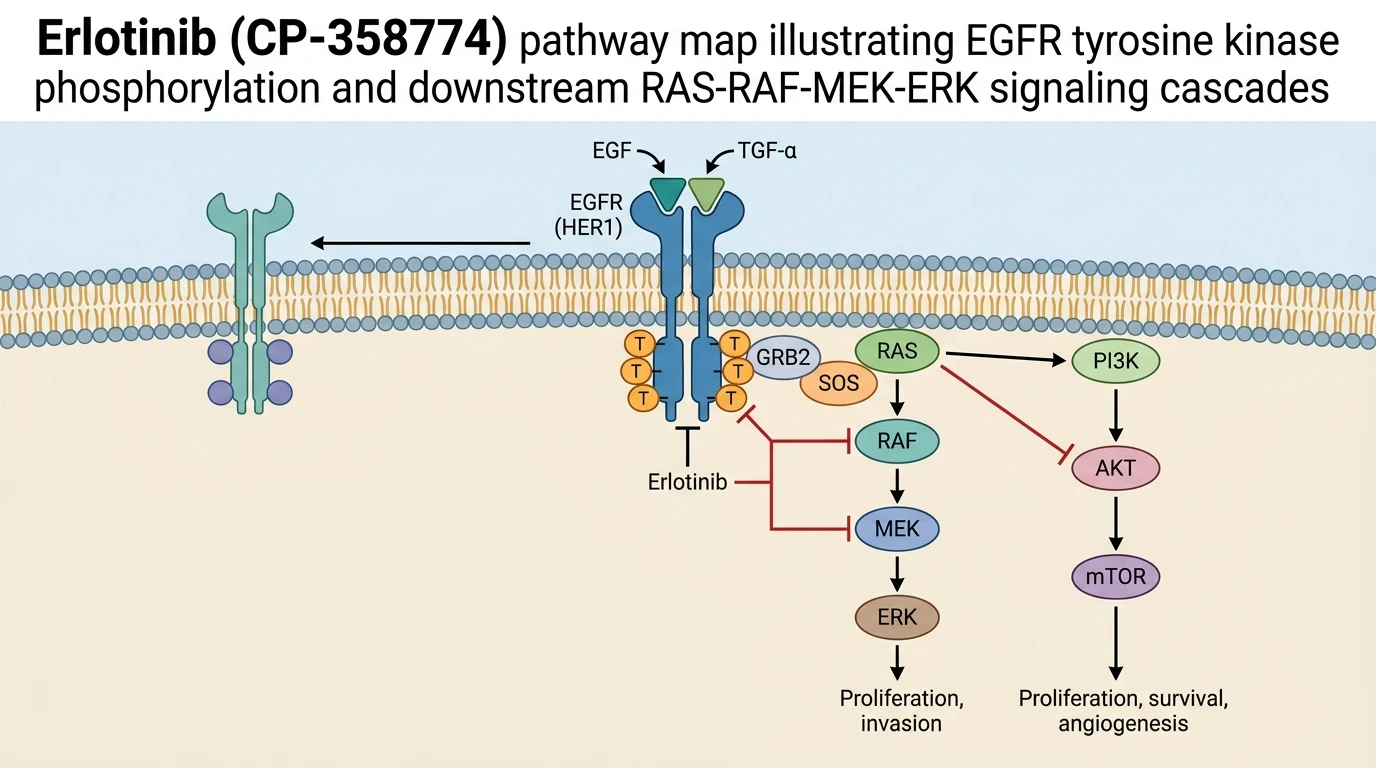
Erlotinib (CP-358774) functions as a potent, reversible, ATP-competitive inhibitor of the EGFR tyrosine kinase domain. By preventing intracellular receptor autophosphorylation, it suppresses downstream activation of pro-survival pathways, including RAS-RAF-MEK-ERK and PI3K-AKT. In unselected sorafenib-refractory hepatocellular carcinoma, however, single-agent or combined EGFR tyrosine kinase inhibition fails to alter tumor growth, reflecting underlying compensatory bypass mechanisms or loss of oncogene addiction to EGFR in advanced disease stages.
Futility Criteria Triggered by Zero Percent Disease Control
The phase II trial met formal stopping parameters immediately following first-stage evaluation. Ten consecutive patients received the combined regimen of bevacizumab and Erlotinib without demonstrating tumor regression. Objective clinical measurements established a 0% overall response rate alongside a 0% disease control rate. Median time-to-progression reached only 1.81 months; median overall survival was limited to 4.37 months. Disease progression occurred rapidly across all treated subjects.
Symptom Profiles Confirm On-Target Tyrosine Kinase Inhibition
Adverse event profiling demonstrated expected target engagement without severe toxicity compounding. Cutaneous reactions occurred frequently among enrolled subjects. Grade 1 and 2 acneiform rashes were recorded in seven patients, while gastrointestinal events were dominated by manageable diarrhea. These clinical manifestations confirm functional inhibition of wild-type receptor sites in peripheral tissue compartments. Despite documented systemic exposure to Erlotinib, intratumoral signal blockade proved insufficient to stall disease progression.
Bypass Cascades Limit Efficacy in Unselected Patient Biomarkers
Translational insights indicate substantial heterogeneity within advanced liver lesions. Unselected hepatocellular tumors rarely exhibit oncogenic addiction to single receptor tyrosine kinases. Following sorafenib failure, alternative growth factor pathways—including FGFR1-4, HGF/MET, and AXL signaling cascades—maintain cellular survival. Dual inhibition of VEGF and EGFR leaves these redundant downstream node clusters fully active. Future clinical strategies require rigorous biomarker selection rather than broad receptor blockade.