CCR Inhibitors
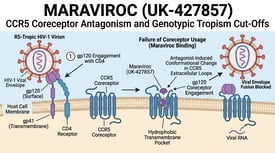
Chemokine receptors (CCRs) are a family of G protein-coupled receptors (GPCRs) that mediate the migration, activation, and localization of leukocytes in response to chemokine gradients. These receptors play a fundamental role in the immune system's ability to respond to infection and injury, but they are also implicated in a wide range of pathological processes, including chronic inflammation, autoimmune diseases, and cancer. Among the most prominent targets in this family are CCR5 and CCR2. CCR5 is well-known as a major co-receptor for the entry of R5-tropic HIV-1 into CD4+ T cells. Its significance was highlighted by the discovery that individuals with a homozygous CCR5-delta32 mutation are largely resistant to HIV infection.
This led to the development of Maraviroc, a small-molecule CCR5 antagonist that was the first of its class to receive FDA approval for the treatment of HIV/AIDS. Beyond virology, CCR5 and CCR2 are involved in the recruitment of inflammatory monocytes and macrophages to sites of tissue damage. Consequently, CCR inhibitors are being investigated for conditions such as rheumatoid arthritis, multiple sclerosis, and inflammatory bowel disease. In the field of hepatology, Cenicriviroc, a dual CCR2/CCR5 antagonist, has been extensively studied for the treatment of non-alcoholic steatohepatitis (NASH) and liver fibrosis, aiming to reduce the inflammatory infiltrate that drives fibrogenesis. In oncology, CCR inhibitors are being explored for their ability to disrupt the tumor microenvironment by blocking the recruitment of myeloid-derived suppressor cells (MDSCs) and tumor-associated macrophages (TAMs), which promote immune evasion and metastasis.
Inhibitors in this class are generally classified as small-molecule antagonists or monoclonal antibodies. Despite the clear rationale for targeting CCRs, clinical success in inflammatory diseases has been challenging, often due to the high degree of redundancy in the chemokine system, where multiple chemokines can bind to the same receptor or multiple receptors can mediate similar functions. This redundancy often necessitates the use of dual or broad-spectrum inhibitors. Another challenge is the potential for 'chemokine-like' side effects or the impairment of normal immune surveillance. Current research is focused on improving the pharmacokinetic properties of these inhibitors and identifying specific patient populations who are most likely to benefit based on their chemokine expression profiles.
Combination strategies, such as pairing CCR antagonists with checkpoint inhibitors in cancer or with other anti-fibrotic agents in NASH, represent the current frontier of research. As our understanding of the complex 'chemokine code' grows, the development of more precise and effective CCR inhibitors continues to be a major goal in immunology and drug discovery.