Androgen Receptor Chemicals
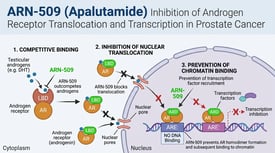
The Androgen Receptor (AR) is a member of the nuclear receptor superfamily that functions as a ligand-dependent transcription factor. In its inactive state, the AR is located in the cytoplasm, complexed with heat shock proteins. Upon binding to androgenic hormones—primarily testosterone or its more potent metabolite, dihydrotestosterone (DHT)—the AR undergoes a conformational change, dissociates from chaperones, homodimerizes, and translocates into the nucleus. There, it binds to specific DNA sequences known as androgen response elements (AREs) in the promoter regions of target genes. This process, facilitated by the recruitment of coactivators or corepressors, regulates the expression of genes essential for the development and maintenance of the male phenotype, muscle mass, bone density, and prostate function. The most critical clinical association for AR modulators is prostate cancer, where AR signaling drives tumor growth and progression.
Androgen deprivation therapy (ADT), which involves reducing systemic androgen levels or directly blocking the AR, is the standard of care. Beyond oncology, AR modulators are used to treat male hypogonadism, delayed puberty, and certain types of breast cancer. They are also investigated for muscle-wasting conditions (sarcopenia and cachexia) and osteoporosis. The pharmacological landscape includes AR agonists (androgens), AR antagonists (antiandrogens), and selective Androgen Receptor modulators (SARMs). First-generation antiandrogens like bicalutamide and flutamide were eventually superseded by second-generation agents such as enzalutamide, apalutamide, and darolutamide. These newer drugs have higher affinity for the AR and inhibit its nuclear translocation and DNA binding more effectively, significantly extending survival in patients with castration-resistant prostate cancer (CRPC).
AR modulators are classified into steroidal and non-steroidal compounds. Non-steroidal antiandrogens are generally preferred in cancer treatment due to their higher selectivity and reduced cross-reactivity with other steroid receptors. SARMs represent a novel class of agents designed to exert tissue-selective agonist effects (e.g., in muscle and bone) while having minimal impact on the prostate and sebaceous glands, aiming to avoid the side effects of traditional anabolic steroids. However, the development of AR-targeted therapies faces significant hurdles, most notably the emergence of resistance in prostate cancer. Mechanisms of resistance include AR amplification, point mutations in the ligand-binding domain (e.g., T878A), and the expression of constitutively active AR splice variants, such as AR-V7, which lack the ligand-binding domain entirely. To address these challenges, current research is focusing on AR degraders (PROTACs), which utilize the cell's ubiquitin-proteasome system to eliminate the AR protein, and N-terminal domain inhibitors that could potentially target all AR variants.
Additionally, combination strategies with PARP inhibitors or immunotherapy are being explored to enhance the efficacy of AR-directed treatments. The ongoing evolution of AR-targeted chemistry continues to be a focal point in the quest for more durable and less toxic therapies for hormone-dependent diseases.