PLX5622 Inhibits CSF1R to Prevent Complement-Mediated Synaptic Pruning in Sepsis-Associated Encephalopathy
Copy code to add this image to your page
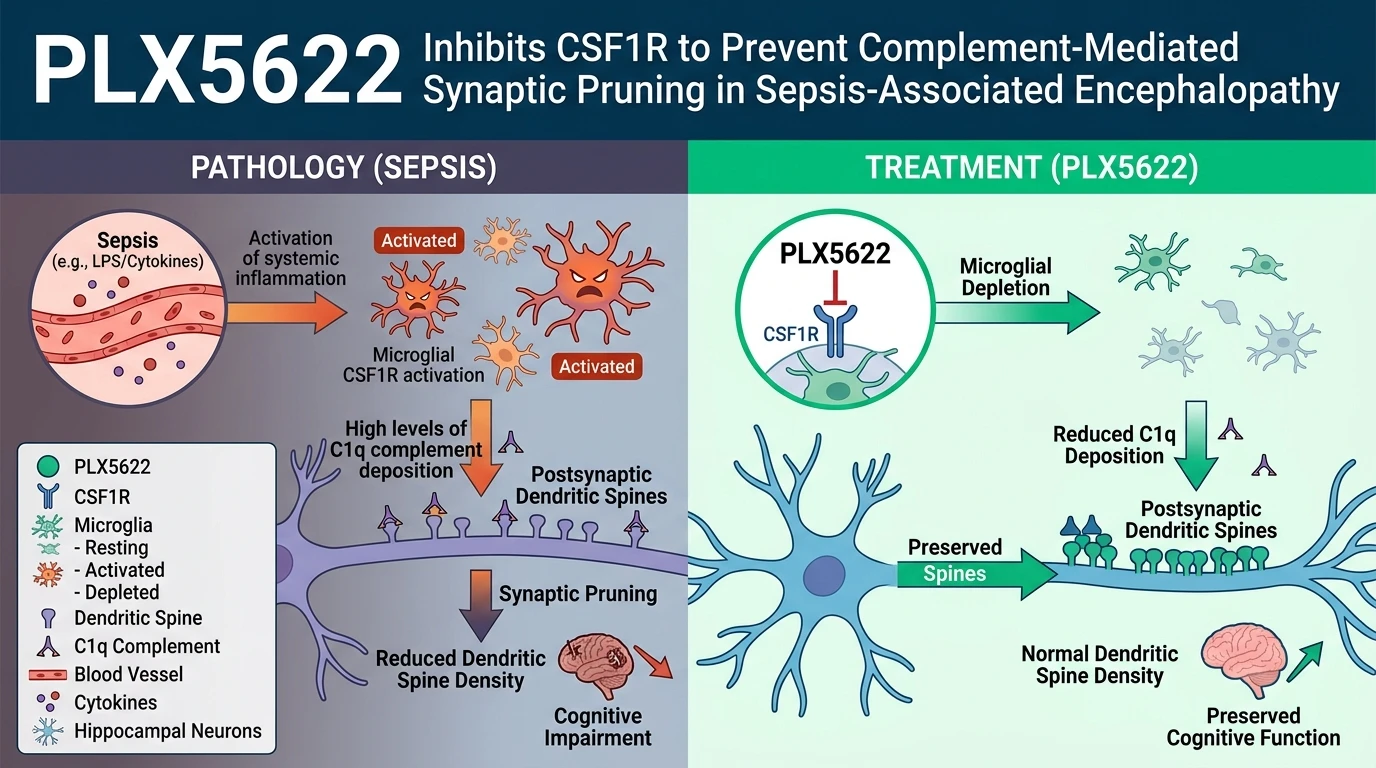
Targeting colony-stimulating factor 1 receptor (CSF1R) with the brain-penetrant small molecule PLX5622 offers a precise method to modulate microglial density and inflammatory signaling within the central nervous system. In systemic inflammatory conditions such as sepsis-associated encephalopathy (SAE), sustained neuroinflammation triggers reactive microgliosis, elevated pro-inflammatory cytokine expression, and aberrant activation of the classical complement cascade. In mouse models of SAE, sustained activation of resident microglia drives pathological engulfment of neuronal synapses, particularly within hippocampal networks required for spatial learning and memory consolidation.
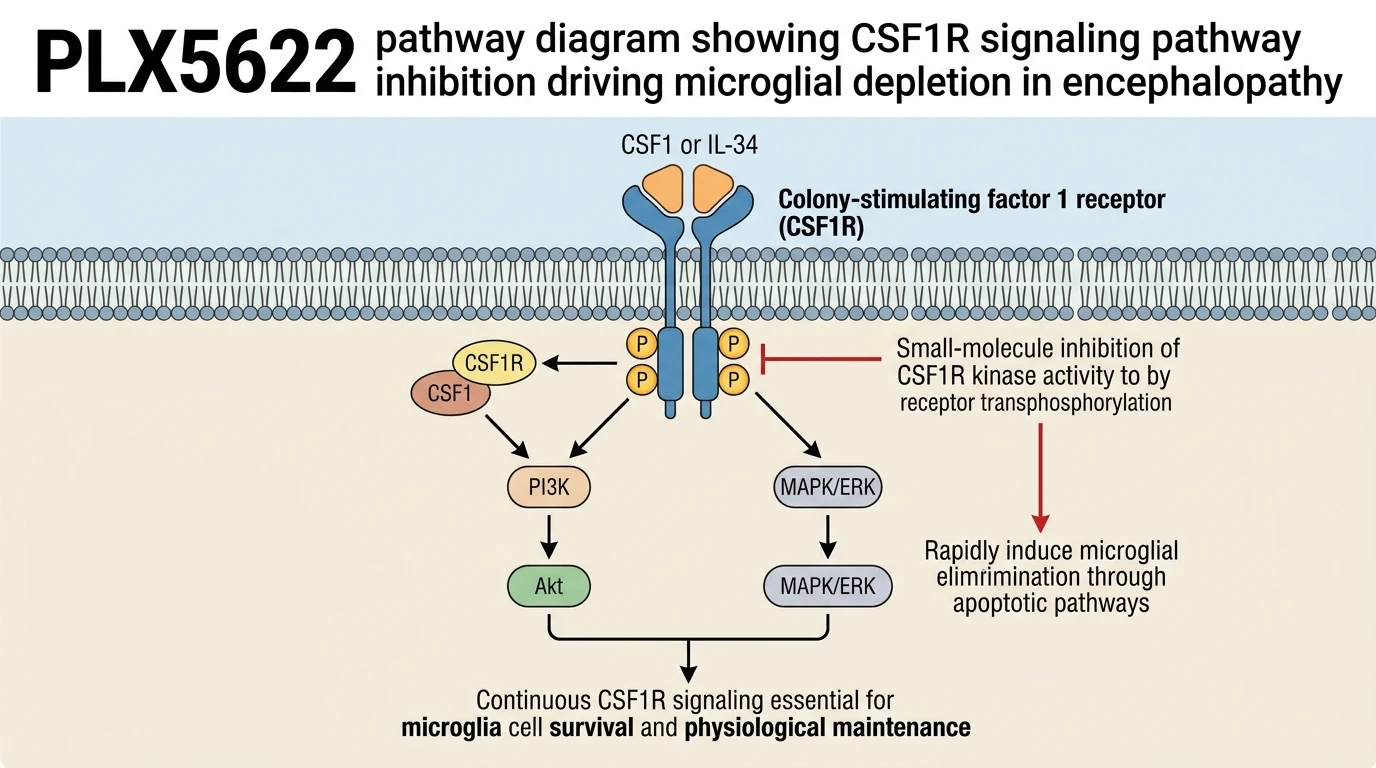
Mechanistically, CSF1R dimerization and transphosphorylation sustain microglial viability and renewal. Oral administration of PLX5622 achieves effective central nervous system exposure, binding competitively with ATP at the active site of CSF1R. Kinase activity ceases. Deprived of critical survival signals, resident microglia undergo rapid apoptosis without inducing widespread secondary neurotoxic responses or damaging peripheral immune populations in short-term experimental windows.
Pharmacological depletion of microglia via PLX5622 substantially alters the neuroinflammatory environment in the septic murine hippocampus. Downstream expression of C1q, the initiating protein of the classical complement cascade, drops markedly following receptor blockade. Under septic conditions, reactive microglia release C1q, which tags vulnerable postsynaptic elements on CA1 pyramidal neurons for elimination. By suppressing microglial abundance and blocking C1q synthesis, PLX5622 interrupts this opsonization cascade. Structural quantitative analyses demonstrate that this blockade preserves dendritic spine density, specifically preserving thin and mushroom-type spines critical for synaptic plasticity.
In behavioral testing, PLX5622 treatment rescues cognitive performance in post-septic animals. Mice subjected to cecal ligation and puncture demonstrate pronounced spatial memory deficits in the Barnes maze assay, exhibiting increased latency and primary errors when locating the escape hatch. PLX5622 administration restores escape latency metrics to near-baseline control levels. These empirical observations highlight the functional consequence of preventing microglial synaptic elimination. Data derived from mouse transcriptomic analyses and genomic reference datasets demonstrate that microglial transcriptomic shifts during severe inflammation closely mirror neurodegenerative gene signatures, reinforcing CSF1R as an actionable therapeutic node.
Although microglial ablation effectively halts complement-mediated synaptic loss, safety boundaries require careful consideration. Microglia perform indispensable homeostatic functions, including clearance of metabolic waste, regulation of neurogenesis, and protection against primary central nervous system pathogens. Prolonged or absolute depletion presents risks of impaired path-clearing capabilities during subsequent infectious challenges. Within the specific experimental framework of acute septic encephalopathy, however, transient CSF1R suppression demonstrates a high therapeutic index, successfully decoupling acute neuroinflammation from long-term cognitive impairment.
Pharmacological Evaluation of CSF1R Inhibition in Encephalopathy
Copy code to add this image to your page
PLX5622 is a selective inhibitor of colony-stimulating factor 1 receptor (CSF1R). In sepsis-associated encephalopathy, systemic inflammation triggers microglial activation and overproduction of complement component C1q, which tags postsynaptic terminals for microglial elimination. By selectively inhibiting CSF1R tyrosine kinase activity, PLX5622 induces microglial apoptosis, markedly reducing hippocampal microglial density. This microglial depletion downregulates C1q deposition, prevents microglial pruning of CA1 dendritic spines, and preserves synaptic structure. Consequently, treatment with PLX5622 rescues spatial memory deficits in behavioral models, establishing targeted microglial depletion as a valid approach to mitigate neurocognitive sequelae following severe sepsis.
Attenuation of C1q-Mediated Synaptic Tagging in Hippocampal Networks
Sepsis triggers systemic immune hyperactivation that rapidly signals across the blood-brain barrier. Hippocampal microglial populations respond by converting to pro-inflammatory phenotypes. These activated cells secrete C1q, which localizes to postsynaptic loci in CA1 neurons. Postsynaptic structures undergo opsonization. Phagocytic microglia then engulf these tagged synaptic elements, resulting in net dendritic spine loss. Administration of PLX5622 interrupts this destructive sequence. Within days of administration in murine models, hippocampal microglial density falls by over 90 percent. C1q protein accumulation in the CA1 stratum radiatum declines concurrently. Dendritic spine density remains intact. Morphological assessments reveal structural preservation of both thin and mushroom spines. High-resolution confocal imaging confirms that microglial-engulfed PSD-95 puncta are significantly reduced compared to non-treated septic controls.
Behavioral Recovery and Preservation of CA1 Neuronal Architecture
Cognitive deficits following sepsis correlate directly with structural synaptic loss within the hippocampus. In behavioral trials using the Barnes maze, vehicle-treated septic mice display severe learning impairment. Target hole search efficiency drops markedly. In contrast, animals receiving PLX5622 maintain spatial memory capabilities comparable to sham-operated controls. Mean escape latency decreases across trial days. Search strategy analysis indicates sustained spatial learning strategies rather than random search behaviors. Electrophysiological recordings from hippocampal slices further indicate that long-term potentiation at Schaffer collateral-CA1 synapses remains preserved following CSF1R inhibition. These functional outcomes demonstrate that halting microglial synaptic elimination protects functional circuit connectivity. Within the boundaries of tested murine models, PLX5622 provides robust neuroprotection against sepsis-induced cognitive decline without inducing overt behavioral toxicity.