CFTRinh-172 characterization of cAMP-dependent CFTR chloride channel activation in colonic epithelia
Copy code to add this image to your page
Epithelial ion transport governs mucosal hydration across the gastrointestinal tract. Transepithelial chloride secretion establishes the primary osmotic gradient necessary for luminal water accumulation. At the apical membrane of enterocytes, the cystic fibrosis transmembrane conductance regulator (CFTR) functions as the principal regulated anion channel. While dysregulated CFTR suppression produces severe mucosal desiccation, pharmacological enhancement of CFTR activity promotes intestinal fluid clearance. Botanical formulations such as Junchoto (JCT) have historically been utilized to manage intestinal transit disorders. However, the precise membrane-level ion channel targets and intracellular signaling cascades driven by JCT required systematic electrophysiological characterization.
Recent empirical investigations systematically evaluated JCT action using human colonic epithelial Caco-2 monolayers and heterologous HEK293T cells expressing human CFTR. Whole-cell patch-clamp recordings revealed that exposure to JCT induced robust, dose-dependent inward chloride currents. The physical properties of these evoked currents matched established CFTR conductances. The currents exhibited linear current-voltage relationships alongside time-independent activation kinetics during voltage steps. These biophysical hallmarks ruled out voltage-gated chloride channels or calcium-activated chloride conductances as the primary drivers of JCT-mediated current elevation. In recombinant HEK293T cells lacking endogenous chloride channels, transfection of human CFTR cDNA restored JCT responsiveness completely, confirming direct functional dependence on CFTR protein expression.
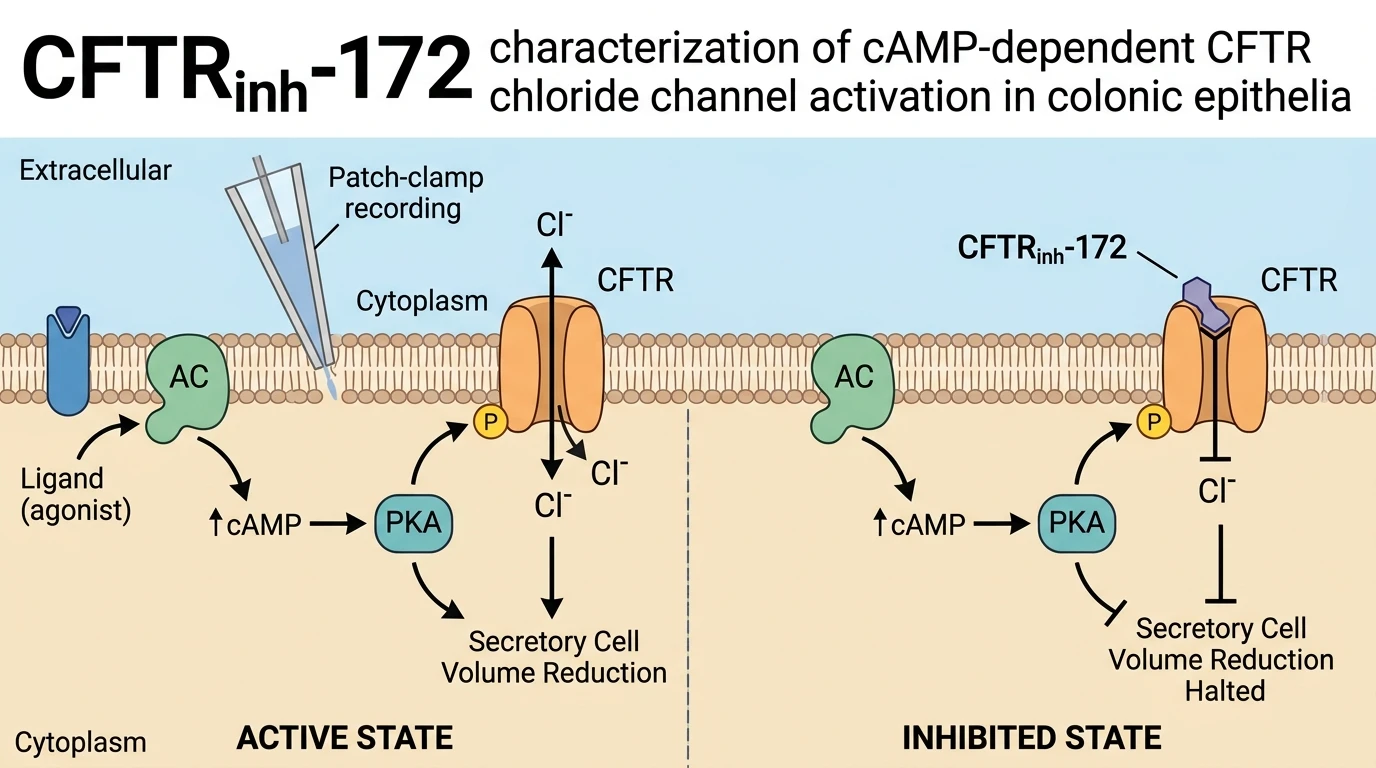
To delineate the upstream signal transduction pathway, researchers interrogated the involvement of second messenger systems. Canonical CFTR gating depends heavily on intracellular cyclic adenosine monophosphate (cAMP) generation. Treatment with the selective adenylate cyclase inhibitor SQ22536 completely abrogated JCT-induced chloride current stimulation in Caco-2 cells. This complete suppression confirmed that JCT does not act as a direct open-channel agonist. Instead, JCT requires functional adenylate cyclase activity and subsequent cAMP accumulation to stimulate CFTR pore opening. Protein kinase A (PKA) activation downstream of cAMP generation leads to phosphorylation of the CFTR regulatory domain, enabling ATP-dependent channel gating and pore opening.
Definitive confirmation of target engagement required genetic and pharmacological inhibition experiments. Transfection of Caco-2 cells with small interfering RNA (siRNA) specifically targeting CFTR mRNA transcripts resulted in a marked reduction in functional channel expression. In CFTR-knockdown cells, JCT application failed to elicit significant anion currents. To complement genetic silencing, researchers employed CFTRinh-172 small-molecule profiles, a widely validated, potent, and selective thiazolidinone CFTR inhibitor. Acute addition of CFTRinh-172 to JCT-stimulated cells produced a rapid, complete reversal of whole-cell chloride currents. The current baseline returned to control levels within minutes of inhibitor administration.
At the cellular level, transepithelial chloride and water transport cause measurable changes in cell geometry. Optical morphometric assays quantified secretory cell volume decreases following JCT exposure. As intracellular chloride and osmotically driven water exited the cell across the apical membrane, cellular volume contracted predictably. Pre-treatment with CFTRinh-172 or SQ22536 significantly blunted this volume reduction. Similarly, CFTR siRNA transfection preserved baseline cell volume during JCT challenge. These combined findings demonstrate that JCT-induced epithelial fluid movement is mediated specifically through the cAMP/PKA/CFTR axis under tested in vitro conditions.
These experimental observations clarify the cellular mechanisms underlying JCT therapy in intestinal models. By validating CFTR as the indispensable molecular channel for JCT action, these studies highlight the potential of targeting CFTR-mediated anion secretion in functional gastrointestinal disorders. However, these in vitro findings in immortalized cell lines remain subject to validation in complex native tissues. Further studies using primary human intestinal organoids and intact mucosal tissue preparations are required to establish physiological kinetics and clinical translation parameters.
Electrophysiological Quantification and Ion Channel Targeted Blockade
Copy code to add this image to your page
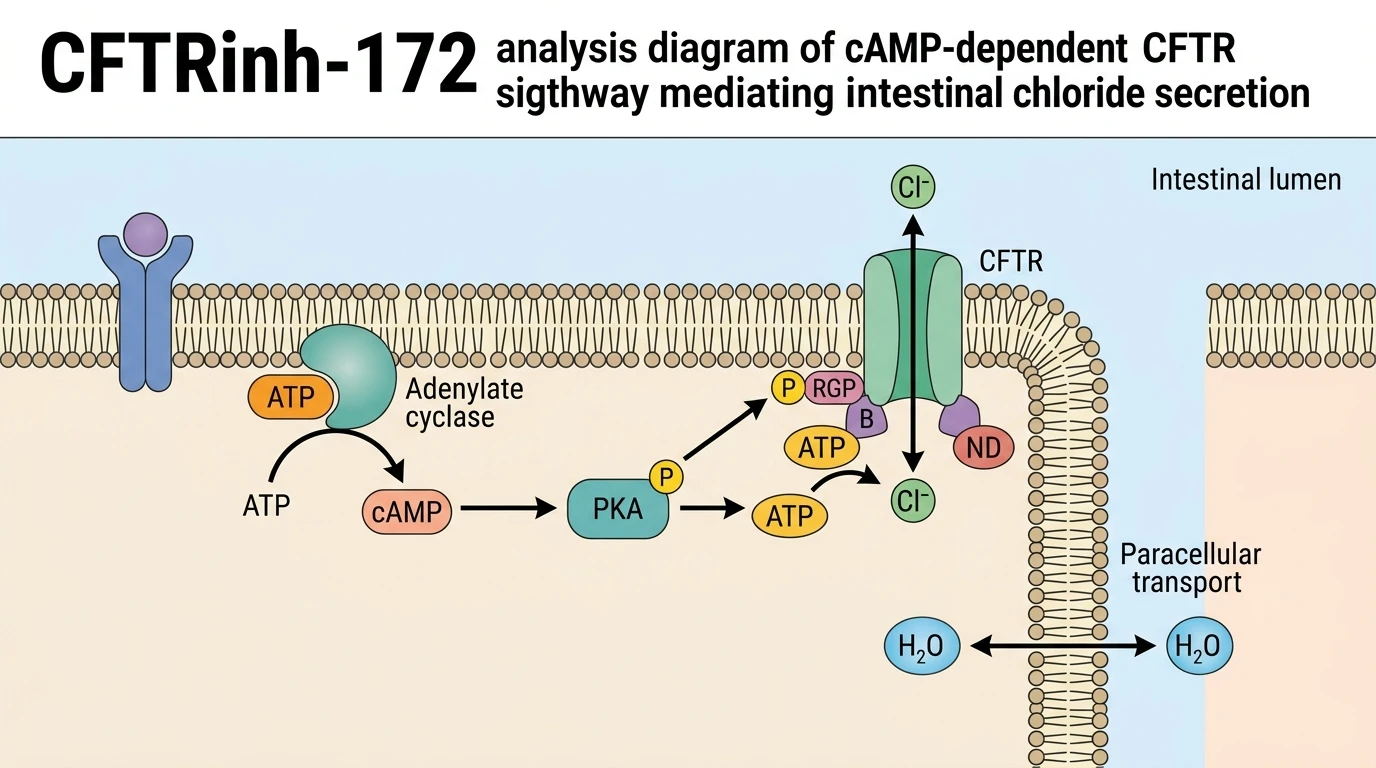
Junchoto stimulates intestinal fluid secretion by activating adenylate cyclase, elevating intracellular cAMP, and inducing PKA phosphorylation of CFTR chloride channels. This opens apical CFTR channels, driving chloride efflux and osmotic water secretion in colonic epithelial cells. Small-molecule inhibition via CFTRinh-172, adenylate cyclase suppression by SQ22536, or siRNA knockdown of CFTR abolishes these chloride currents and prevents secretory cell volume changes, confirming target specificity.
cAMP-Dependent Activation of Transepithelial Chloride Conductance
Junchoto administration elicited robust whole-cell chloride currents in cultured Caco-2 monolayers. Current amplitudes scaled in a dose-dependent manner under voltage-clamp conditions. To isolate adenylate cyclase involvement, cells were pretreated with SQ22536. Enzymatic inhibition of adenylate cyclase prevented current elevation entirely. Intracellular cyclic AMP accumulation remains essential for initial pore opening. PKA-mediated phosphorylation enables subsequent channel gating. Whole-cell conductance matched known CFTR biophysical parameters; current-voltage relationships displayed characteristic linearity without time-dependent inactivation.
Target Validation Using CFTRinh-172 and Gene Knockdown
Specificity of the Junchoto-induced response was established using targeted interventions. Application of CFTRinh-172 completely abolished activated chloride currents within minutes. Current density returned to baseline levels. Parallel siRNA knockdowns targeting CFTR transcripts produced equivalent suppression of chloride transport. Secretory cell volume reductions—a physical biomarker of fluid efflux—were quantified using optical imaging. Blockade by CFTRinh-172 suppressed the cell volume decrease triggered by JCT exposure. These observations confirm that CFTR functions as the primary effector pore mediating JCT-induced fluid secretion in colonic epithelial models.