Microtubule Associated Inhibitors
Microtubule-associated inhibitors, more commonly known as microtubule-targeting agents (MTAs), are a highly successful class of drugs that interfere with the dynamic instability of microtubules, which are essential components of the cellular cytoskeleton. Microtubules are polymers of alpha- and beta-tubulin subunits and play critical roles in maintaining cell shape, intracellular transport, and, most importantly, the formation of the mitotic spindle during cell division. MTAs are generally classified into two broad categories: microtubule-stabilizing agents and microtubule-destabilizing agents. Stabilizing agents, such as the taxanes (Paclitaxel, Docetaxel) and epothilones, bind to the interior surface of the microtubule, promoting tubulin polymerization and preventing depolymerization. This leads to the formation of overly stable, non-functional microtubules, which arrests the cell in the G2/M phase and triggers apoptosis.
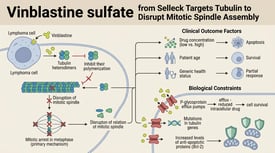
Destabilizing agents, such as the vinca alkaloids (Vincristine, Vinblastine) and eribulin, bind to different sites on the tubulin dimer (the vinca site and the colchicine site), inhibiting polymerization and causing the disassembly of existing microtubules. These agents are used to treat a wide variety of cancers, including breast, lung, ovarian, and hematologic malignancies. Eribulin, a synthetic analog of the marine natural product halichondrin B, is notable for its unique mechanism of binding to the growing ends of microtubules, providing a distinct advantage in taxane-resistant cases. Despite their widespread use, MTAs are associated with significant side effects, most notably peripheral neuropathy, which results from the disruption of microtubule-dependent axonal transport in neurons. Myelosuppression is another common dose-limiting toxicity.
Resistance to MTAs is also a major clinical challenge, often mediated by the overexpression of the P-glycoprotein efflux pump, alterations in tubulin isotype expression (such as the upregulation of beta-III tubulin), or mutations in the tubulin binding sites. Recent research progress has focused on the development of next-generation MTAs with improved pharmacokinetic profiles and reduced susceptibility to resistance. This includes the development of oral formulations and the use of MTAs as payloads in antibody-drug conjugates (ADCs), such as Brentuximab vedotin and Trastuzumab emtansine (T-DM1), which allow for the targeted delivery of potent microtubule toxins directly to tumor cells, thereby minimizing systemic toxicity. Furthermore, there is ongoing interest in targeting microtubule-associated proteins (MAPs) and mitotic motors like kinesins (e.g., Eg5/KSP) as an alternative way to disrupt the mitotic spindle. As the field moves toward more personalized approaches, the identification of biomarkers to predict both response and the risk of neuropathy will be crucial for optimizing the use of these foundational anti-cancer agents.
The enduring relevance of MTAs in the clinic, combined with innovative delivery strategies, ensures that they will remain a vital component of the oncological armamentarium for the foreseeable future.