p97 Inhibitors
p97, also known as valosin-containing protein (VCP), is a highly conserved, ubiquitously expressed AAA+ (ATPases Associated with diverse cellular Activities) ATPase that plays a central role in maintaining cellular protein homeostasis. Its mechanism of action involves ATP-dependent extraction of ubiquitinated proteins from membranes or protein complexes, thereby facilitating their subsequent degradation by the proteasome or lysosome. p97 is a critical component of several key signaling pathways, including the endoplasmic reticulum-associated degradation (ERAD) pathway, where it extracts misfolded proteins from the ER for proteasomal degradation. It also participates in the DNA damage response, autophagy, ubiquitin-proteasome system (UPS) function, and membrane fusion. By regulating the fate of numerous proteins, p97 ensures cellular integrity and function. Dysregulation of p97 activity is associated with a range of diseases, most notably various cancers (including multiple myeloma, acute myeloid leukemia, and solid tumors), where its overexpression or hyperactivity supports the high protein turnover demands of rapidly proliferating cells. Furthermore, mutations in p97 are linked to neurodegenerative disorders such as amyotrophic lateral sclerosis (ALS), frontotemporal dementia (FTD), and inclusion body myopathy associated with Paget's disease of bone and frontotemporal dementia (IBMPFD), highlighting its crucial role in neuronal health.
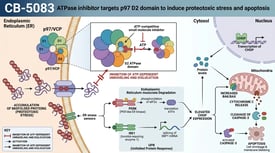
Current research progress on p97 inhibitors is robust, with several compounds having advanced into clinical trials, primarily for oncology indications. Preclinical studies have demonstrated that p97 inhibition can induce ER stress, activate the unfolded protein response, and lead to the accumulation of ubiquitinated proteins, ultimately triggering apoptosis in cancer cells. CB-5083 was one of the first p97 inhibitors to enter clinical trials for various advanced solid tumors and hematological malignancies, showing promising activity but also dose-limiting toxicities. NMS-873, another potent and selective p97 inhibitor, has also been evaluated in clinical settings. More recent compounds, such as UPCDC-30245, aim for improved selectivity and reduced off-target effects. While no p97 inhibitor has yet received FDA approval, the ongoing clinical development underscores the therapeutic potential of targeting p97, particularly in cancers that are resistant to proteasome inhibitors. p97 inhibitors are primarily classified by their mechanism of action, specifically whether they are ATP-competitive or allosteric.
Most current inhibitors target the ATPase activity of p97, often by binding to one of its two ATPase domains (D1 or D2). Examples include: 1) ATP-competitive inhibitors like DBeQ (N2,N4-dibenzylquinazoline-2,4-diamine), which was an early research tool compound, and CB-5083; 2) Allosteric inhibitors like NMS-873, which binds to a site distinct from the ATP-binding pocket, inducing conformational changes that impair ATPase activity. The development of inhibitors with enhanced selectivity for specific p97 functions or isoforms, if they exist, is an area of active research. Other relevant general knowledge includes the recognition that p97's broad involvement in proteostasis presents both therapeutic opportunities and challenges. Its essential role in normal cellular function means that systemic inhibition can lead to significant off-target toxicities. Therefore, developing inhibitors with improved therapeutic windows, perhaps by exploiting vulnerabilities unique to cancer cells or specific disease contexts, is critical. Combination therapy strategies, particularly with proteasome inhibitors (e.g., bortezomib, carfilzomib) or other agents that induce proteotoxic stress, are being actively explored to enhance efficacy and mitigate resistance.
The intricate structural biology of p97, including its hexameric structure and multiple cofactors, offers additional avenues for developing novel modulators. Continued research into p97's precise roles in disease pathogenesis and the development of more refined inhibitors hold significant promise for addressing unmet medical needs.