AMG 487 Inhibition of CXCR3 Chemokine Receptor Signaling and Clinical Pharmacokinetic Failure
Copy code to add this image to your page
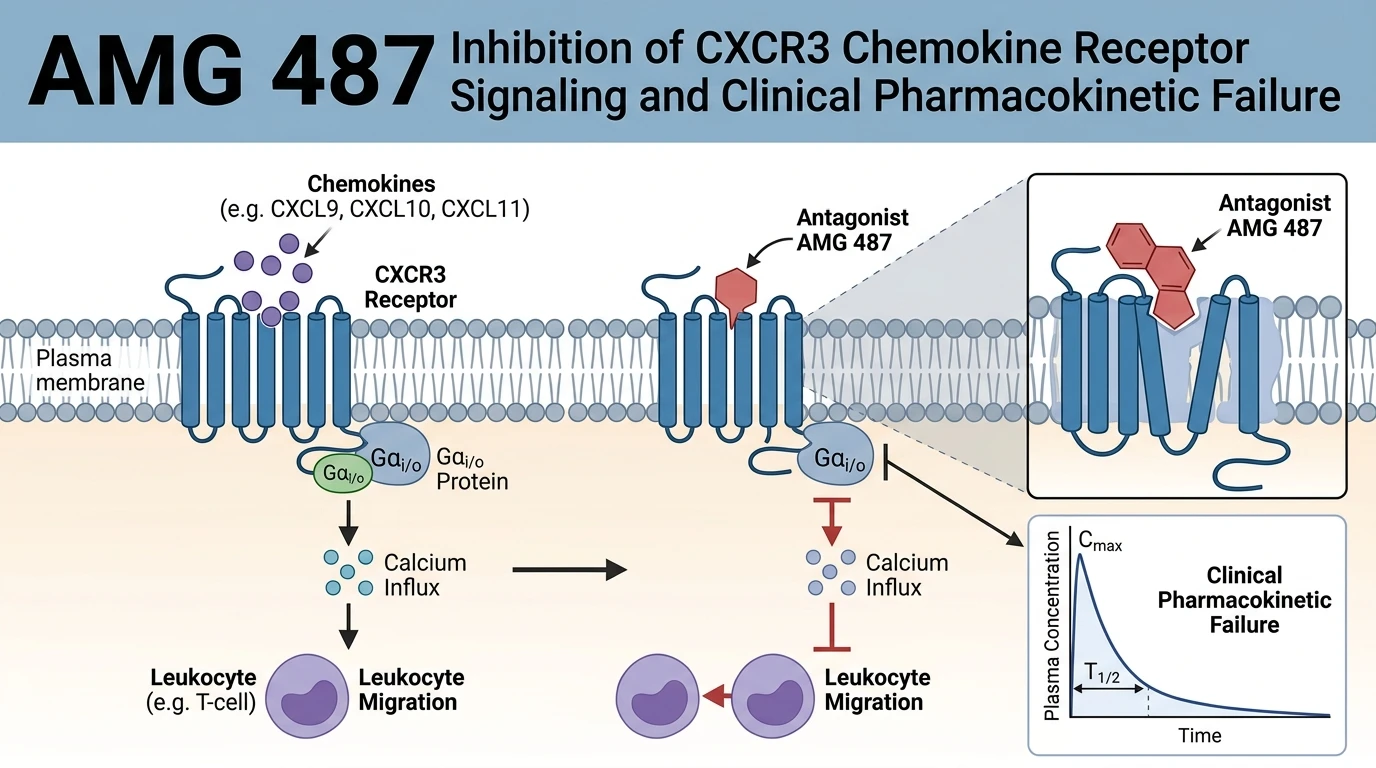
CXC chemokine receptor 3 (CXCR3) is a class A G-protein coupled receptor selectively expressed on activated Th1 CD4+ T lymphocytes, CD8+ cytotoxic T cells, and natural killer (NK) cells. Interactions between CXCR3 and its primary chemokine ligands—CXCL9 (MIG), CXCL10 (IP-10), and CXCL11 (I-TAC)—direct the localized migration of immune effector cells into inflamed peripheral tissues. Aberrant activation of this signaling axis drives chronic cellular recruitment in autoimmune and inflammatory pathologies, including psoriasis, rheumatoid arthritis, and inflammatory bowel disease. Consequently, targeting CXCR3-mediated cell migration represents a rational strategy for targeted anti-inflammatory intervention.
AMG 487 was developed as a potent, orally bioavailable, small-molecule CXCR3 antagonist belonging to the 8-azaquinazolinone chemical class. In competitive radioligand binding assays using recombinant human CXCR3-expressing cell lines, AMG 487 demonstrated high binding affinity, effectively displacing CXCL10 and CXCL11 at low nanomolar concentrations. Functional in vitro evaluation confirmed that AMG 487 acts as a non-competitive or allosteric antagonist, potently inhibiting ligand-induced intracellular calcium mobilization and downstream phosphorylation of extracellular signal-regulated kinase (ERK). Most importantly, AMG 487 blocked CXCR3-mediated chemotaxis of primary human T lymphocytes in transwell migration assays, establishing its ability to interrupt cellular trafficking driven by inflammatory chemokines.
Preclinical in vivo studies reinforced the therapeutic potential of AMG 487. In rodent models of acute and chronic cutaneous inflammation, administration of AMG 487 markedly suppressed leukocyte recruitment to dermal sites, resulting in reduced epidermal thickness and diminished inflammatory cytokine expression. These preclinical observations validated the hypothesis that pharmacological CXCR3 blockade could attenuate tissue-specific inflammatory cascades.
Despite robust preclinical efficacy, clinical translation faced substantial hurdles. In a Phase IIa clinical trial evaluated in patient cohorts with moderate-to-severe plaque psoriasis, AMG 487 failed to meet primary clinical efficacy endpoints. Subsequent pharmacokinetic (PK) and metabolic analyses elucidated the mechanistic basis for this clinical failure. The drug exhibited pronounced inter-individual PK variability in human subjects, leading to sub-therapeutic systemic drug exposure in a significant proportion of patients.
Mechanistic investigation demonstrated that the erratic pharmacokinetic profile was driven by human-specific bioactivation pathways. AMG 487 undergoes hepatic biotransformation to produce an M2 phenolic metabolite, designated M4. This metabolite undergoes further oxidative metabolism by Cytochrome P450 3A4 (CYP3A4), generating a reactive quinone-type intermediate. Structural data available in protein structural databases highlight how reactive metabolites engage metabolic enzymes; in this case, the reactive intermediate forms a covalent adduct specifically with the Cys239 residue within the active site of CYP3A4. This covalent binding causes time-dependent inhibition (TDI) and mechanism-based inactivation of CYP3A4, resulting in non-linear clearance kinetics and unpredictable systemic drug levels in humans.
Although AMG 487 was discontinued from clinical development due to these metabolic liabilities, the structural and mechanistic findings provided critical insights for structure-activity relationship (SAR) optimization. Subsequent medicinal chemistry programs utilized these data to modify the 8-azaquinazolinone scaffold, successfully decoupling CXCR3 receptor antagonism from CYP3A4 time-dependent inactivation to yield second-generation candidates with superior metabolic stability.
Pharmacological Characterization and Clinical Pharmacokinetic Liabilities
Copy code to add this image to your page
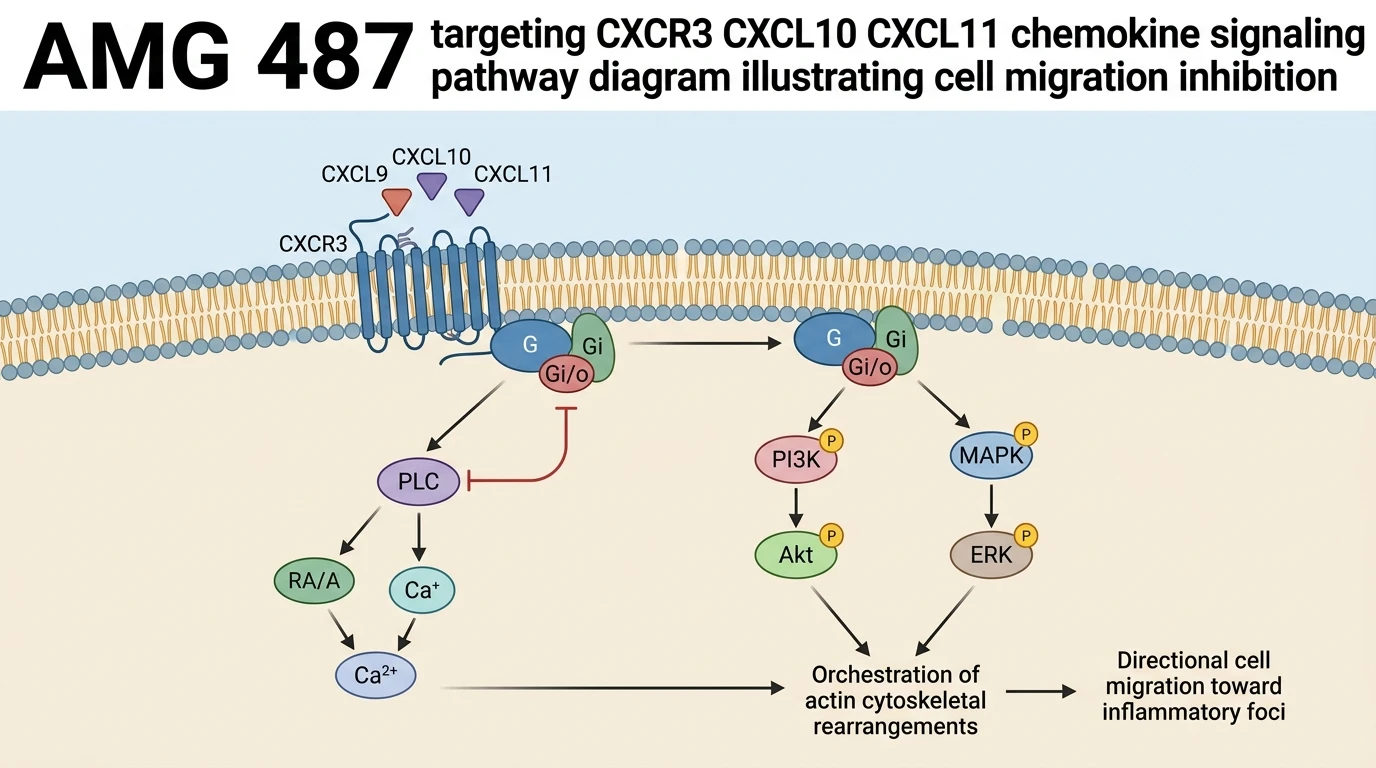
AMG 487 acts as a selective, small-molecule antagonist of CXCR3, blocking receptor interaction with ligands CXCL9, CXCL10, and CXCL11. This inhibition prevents G-protein signaling, calcium mobilization, and cell migration. Although highly effective preclinically, clinical failure occurred due to time-dependent CYP3A4 inhibition caused by covalent binding of its M4 metabolite to Cys239.
Metabolite-Mediated Covalent Modification of CYP3A4 Active Site
In vitro hepatic microsomal assays demonstrated pronounced time-dependent inactivation of CYP3A4 following incubation with the compound. The phenomenon stemmed from the oxidative bioactivation of the M2 phenolic metabolite, designated M4. Reactive quinone-like intermediates form rapidly during phase I oxidation. These reactive species selectively target Cys239 in the CYP3A4 substrate-binding cavity. Covalent adduction occurs rapidly. This alkylation irreversibly disables catalytic activity. Consequentially, clearance rates in human subjects fluctuated unpredictably across trial cohorts.
Pharmacokinetic Divergence Between Rodent Models and Human Subjects
Preclinical rodent studies exhibited robust systemic exposure and clear inhibition of T cell recruitment. Rodent models cleared the molecule primarily through direct renal excretion without generating substantial reactive metabolites. Human hepatocytes, however, displayed distinct metabolic flux toward the M4 pathway. High inter-individual variability compromised drug exposure. Systemic concentrations fell below target occupancy thresholds in clinical cohorts. Pharmacodynamic biomarkers reflected insufficient receptor blockade in inflamed cutaneous tissue. AMG 487 failed to demonstrate efficacy in Phase IIa psoriasis trials as a direct result of these species-specific metabolic differences.
Medicinal Chemistry Refinement to Eliminate Time-Dependent Inhibition
Addressing CYP3A4 time-dependent inhibition required systematic structural modifications of the 8-azaquinazolinone core. Replacing metabolically labile aromatic positions blocked quinone formation. Halogen substitutions attenuated metabolic soft spots. The modified derivatives retained high binding affinity for CXCR3 while abolishing enzyme inactivation. Binding affinities remained in the low nanomolar range. These SAR modifications provided a viable template for second-generation chemokine receptor antagonists.