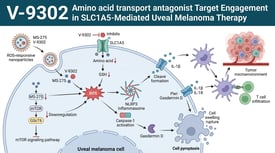
Amino acid transporter Inhibitors
Amino acid transporter inhibitors are an emerging class of therapeutic agents that target the specialized proteins responsible for the uptake of essential and non-essential amino acids into cells. In many diseases, particularly cancer, cells undergo metabolic reprogramming to meet increased demands for nutrients, often becoming 'addicted' to specific amino acids like glutamine, leucine, and cystine. The mechanism of action for these inhibitors involves blocking transporters such as LAT1 (SLC7A5), ASCT2 (SLC1A5), and xCT (SLC7A11). LAT1 is a sodium-independent transporter that delivers large neutral amino acids like leucine into the cell, which in turn activates the mTORC1 pathway, a master regulator of cell growth. ASCT2 is a major glutamine transporter, while xCT is a cystine/glutamate antiporter critical for maintaining intracellular glutathione levels and protecting cells from oxidative stress and ferroptosis.
Diseases associated with these targets include various solid tumors (e.g., lung, breast, and colon cancer), hematological malignancies, and certain neurological disorders. The research progress for Amino acid transporter inhibitors has moved from basic biochemical studies to clinical evaluation. JPH203, a selective LAT1 inhibitor, has shown promising results in Phase I clinical trials for advanced solid tumors, particularly in Japan. V-9302 is a well-studied preclinical inhibitor of ASCT2 that effectively suppresses tumor growth by inducing oxidative stress and inhibiting mTORC1. Inhibitors of xCT, such as Erastin and Sulfasalazine, are being explored for their ability to induce ferroptosis, a form of iron-dependent regulated cell death, in therapy-resistant cancers.
These inhibitors can be classified into substrate analogs, which compete with amino acids for the binding site, and non-analog small molecules that may act through allosteric or irreversible mechanisms. A significant challenge in the field is the redundancy of amino acid transporters; cells may upregulate alternative transporters to compensate for the inhibition of a primary one. Additionally, since amino acid transport is vital for normal physiological functions, such as the transport of nutrients across the blood-brain barrier or in the kidneys, achieving a therapeutic window that minimizes systemic toxicity is crucial. Current research is focusing on the development of more potent and selective inhibitors, as well as the identification of biomarkers to predict which tumors are most dependent on specific transporters. Combination strategies, such as pairing transporter inhibitors with traditional chemotherapy or targeted inhibitors of the MAPK or PI3K pathways, are also being investigated to overcome metabolic compensation and enhance anti-tumor efficacy.
As the field of nutrient signaling continues to expand, amino acid transporter inhibitors represent a highly promising avenue for precision oncology.