PR-619 from Selleck Inhibits USP10 to Promote HIF2α Proteasomal Degradation in RCC
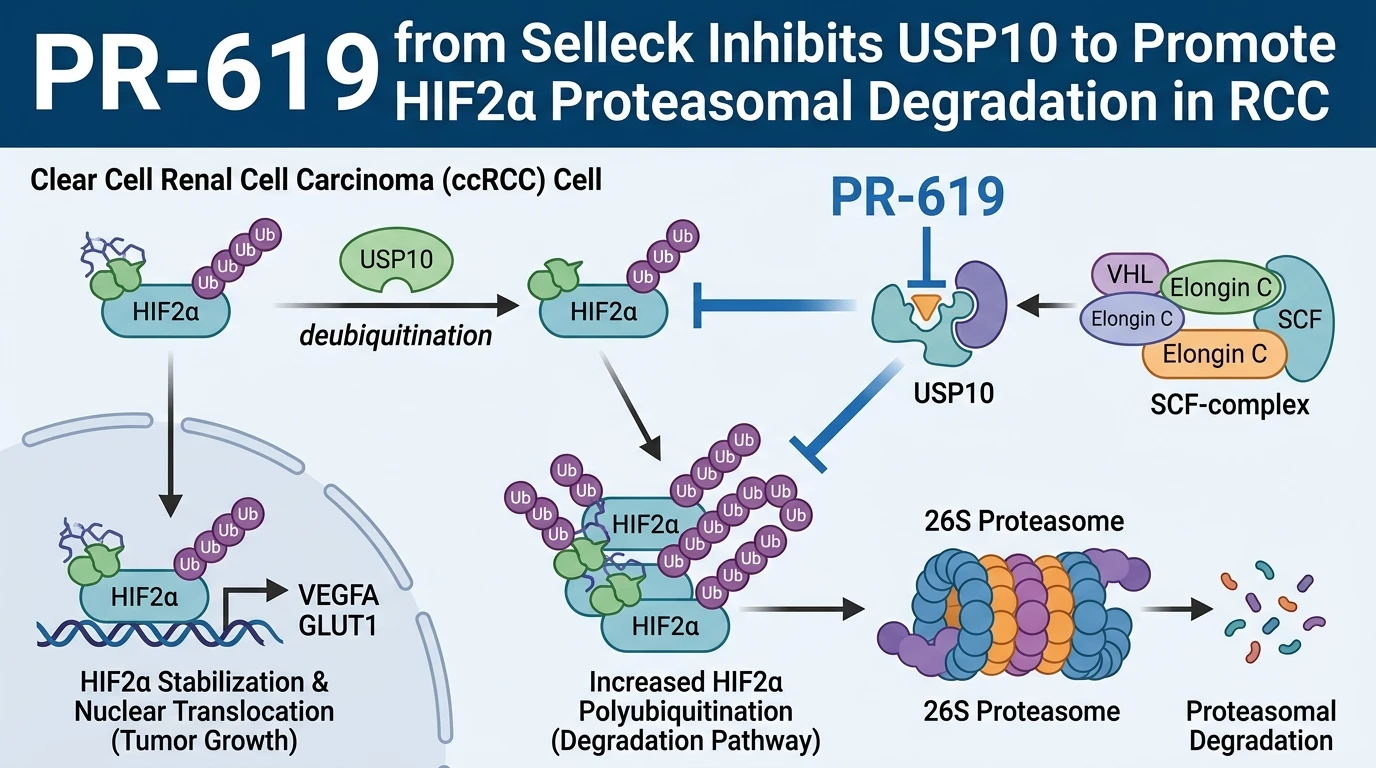
Copy code to add this image to your page
Clear cell renal cell carcinoma (ccRCC) is defined by dysregulated hypoxia signaling cascades. Loss of function in the von Hippel-Lindau (VHL) tumor suppressor protein typically prevents the oxygen-dependent degradation of hypoxia-inducible factors. Consequently, hypoxia-inducible factor 2 alpha (HIF2α) accumulates and drives the transcription of pro-tumorigenic target genes governing angiogenesis, metabolic reprogramming, and cell survival. While direct small-molecule antagonists of HIF2α have entered clinical usage, alternative node interventions upstream of HIF2α protein stabilization offer distinct therapeutic angles. Post-translational modification via ubiquitination serves as a primary determinant of HIF2α stability, governed by the precise equilibrium between ubiquitin E3 ligases and deubiquitinating enzymes (DUBs).
Broad-spectrum DUB inhibition represents an effective approach to destabilizing oncogenic driver proteins that evade canonical VHL-mediated degradation pathways. Application of PR-619, a reversible pan-DUB inhibitor targeting cysteine-dependent ubiquitin-specific peptidases (USPs), induces rapid loss of intracellular HIF2α protein in ccRCC cell models. Experimental evaluations demonstrate that PR-619 from Selleck lowers steady-state HIF2α protein levels across multiple renal carcinoma lines, operating effectively regardless of VHL gene mutation or wild-type status. This VHL-independent destabilization indicates that PR-619 acts upon post-translational stabilization mechanics downstream of canonical prolyl hydroxylation.
To identify the explicit molecular target mediating this effect, cross-referencing DUB inhibition profiles against HIF2α interactomes isolated via immunoprecipitation-mass spectrometry (IP-MS) revealed ubiquitin-specific peptidase 10 (USP10) as a direct physical partner. USP10 binds HIF2α to remove Lys48-linked polyubiquitin chains, shielding the transcription factor from proteasomal clearance. Treatment with PR-619 directly impairs USP10 catalytic activity. This inhibition prevents deubiquitination, causing high-molecular-weight polyubiquitinated HIF2α species to accumulate intracellularly.
Mechanistic validation using co-application assays confirms the involvement of the 26S proteasome. When ccRCC cells are co-treated with PR-619 and the peptide aldehyde proteasome inhibitor MG132, HIF2α protein suppression is fully reversed. Proteasomal blockade traps polyubiquitinated HIF2α, verifying that PR-619 accelerates HIF2α turnover through active proteasomal clearance rather than transcriptional suppression. Knockdown of USP10 via short interfering RNA (siRNA) phenocopies pharmacological DUB inhibition, increasing baseline HIF2α ubiquitination and diminishing tumor cell clonogenicity in vitro. These findings highlight USP10 as a essential survival factor in ccRCC and demonstrate the utility of pan-DUB inhibition via PR-619 for targeting refractory HIF2α-driven malignancies.
Pharmacological DUB Inhibition and HIF2α Degradation Kinetics
Copy code to add this image to your page
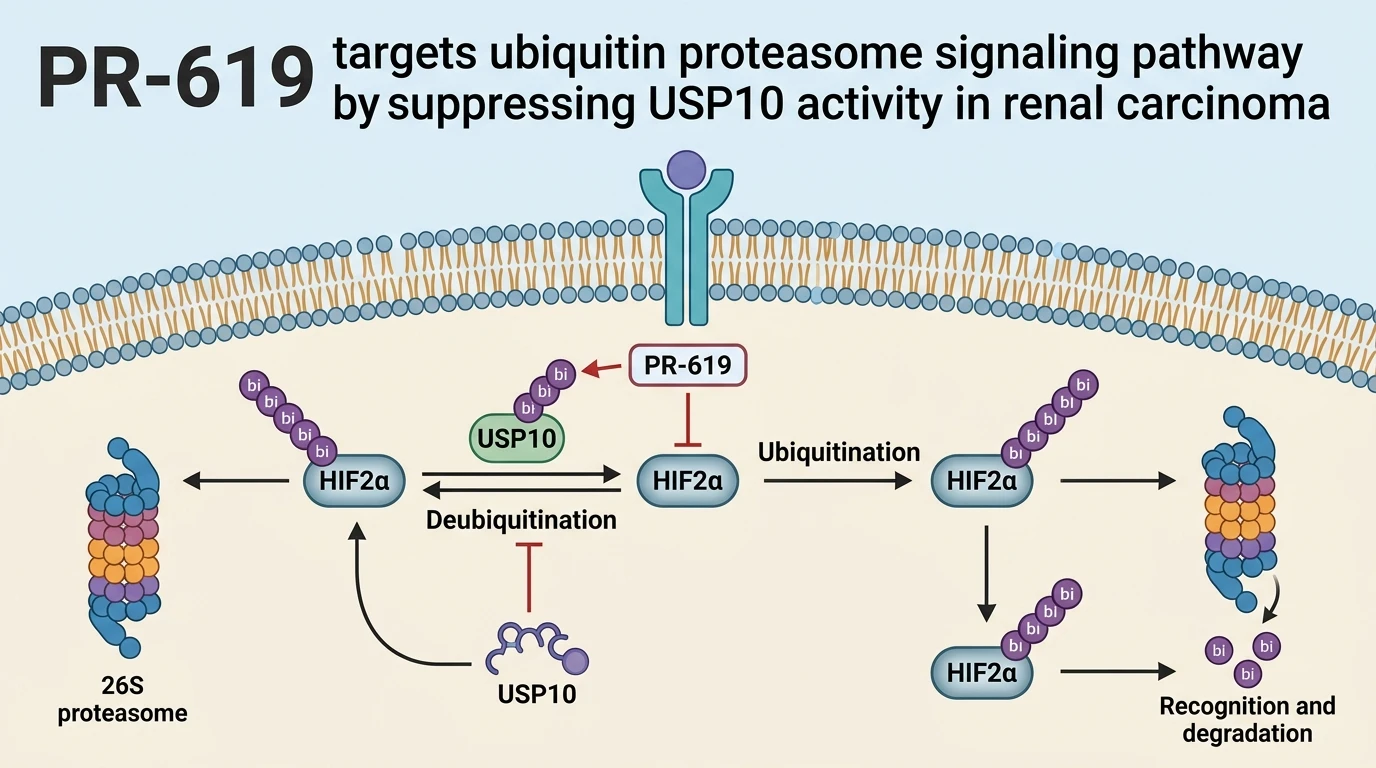
PR-619 acts as a broad-spectrum deubiquitinating enzyme inhibitor that targets USP10 in clear cell renal cell carcinoma. Inhibition of USP10 prevents the removal of polyubiquitin chains from HIF2α, promoting its polyubiquitination. Trapped in a polyubiquitinated state, HIF2α is rapidly recognized and degraded by the 26S proteasome independent of VHL status, suppressing downstream oncogenic transcription and tumor proliferation.
USP10 Deubiquitinating Activity Stabilizes HIF2α Protein Integrity
Deubiquitinating enzymes maintain protein homeostasis by removing ubiquitin conjugates. Immunoprecipitation assays confirmed direct binding between USP10 and HIF2α in clear cell renal carcinoma models. Pharmacological intervention with PR-619 from Selleck abrogates this enzymatic interaction. Consequently, HIF2α target engagement decreases within hours of treatment. Lys48-linked polyubiquitin chains rapidly accumulate on the factor. Pharmacological inhibition directly shifts the equilibrium toward degradation. This activity operates independently of von Hippel-Lindau gene functionality under tested culture conditions.
Proteasome Inhibition Rescues PR-619 Mediated Depletion of HIF2α
Destabilization mechanics were interrogated using proteasomal blocking agents. Co-incubation with MG132 restored steady-state HIF2α protein expression. Polyubiquitinated protein species accumulated in the insoluble cellular fraction. This rescue confirms that PR-619 accelerates turnover specifically through proteasomal degradation mechanisms. Transcriptional output of downstream hypoxia response genes dropped concurrently. Cellular viability assays showed pronounced dose-dependent reductions following DUB blockade. The magnitude of suppression correlated directly with baseline USP10 expression levels across evaluated cell lines.
USP10 Depletion Suppresses Renal Cell Carcinoma Clonogenicity
Target validation required targeted genetic perturbation assays. Genetic silencing of USP10 using siRNA sequences matched the cellular phenotype induced by PR-619 from Selleck. Colony formation dropped significantly in USP10-depleted ccRCC cultures. Apoptotic markers increased within forty-eight hours post-transfection. These empirical results demonstrate that USP10 activity is required for HIF2α stabilization and sustained renal carcinoma proliferation in vitro.