Cathepsin B Inhibitors
Cathepsin B is a prominent lysosomal cysteine protease, integral to intracellular protein degradation and turnover within the endo-lysosomal system. Beyond its conventional role, Cathepsin B can be secreted into the extracellular milieu under pathological conditions, where its proteolytic activity contributes to a wide array of disease processes. Its broad substrate specificity allows it to cleave various proteins, including extracellular matrix components, pro-enzymes, and signaling molecules, thereby influencing diverse cellular functions such as antigen presentation, bone remodeling, and programmed cell death. The dysregulation of Cathepsin B activity, particularly its overexpression and secretion, is strongly implicated in the pathogenesis and progression of numerous diseases. Foremost among these diseases is cancer, where Cathepsin B facilitates tumor invasion, metastasis, and angiogenesis by degrading the extracellular matrix and basement membrane, promoting tumor cell migration. It is also associated with inflammatory conditions like arthritis, pancreatitis, and inflammatory bowel disease, contributing to tissue damage and perpetuating inflammatory cascades. Furthermore, Cathepsin B has been linked to neurodegenerative disorders such as Alzheimer's and Parkinson's diseases, where it may contribute to protein aggregation and neuronal dysfunction, as well as cardiovascular diseases like atherosclerosis. Its involvement in parasitic infections also highlights its broad pathological relevance.
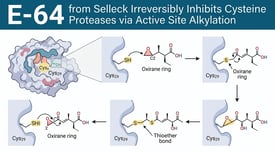
The multifaceted roles of Cathepsin B underscore its potential as a therapeutic target across various disease indications. Research into Cathepsin B inhibitors spans both preclinical and early clinical stages. Numerous synthetic inhibitors have been developed, broadly classified by their mechanism of action as either reversible or irreversible. Irreversible inhibitors, such as the epoxides and vinyl sulfones (e.g., E-64 and its derivatives), are often used as research tools due to their potent and broad-spectrum cysteine protease inhibition. Reversible inhibitors, including specific aldehydes, nitriles, and ketones, offer greater potential for therapeutic development due to their tunable pharmacokinetics and reduced risk of off-target covalent modifications. Inhibitors can also be categorized by their chemical structure (peptide-mimetic vs. non-peptide) and selectivity (pan-cysteine protease vs. highly selective Cathepsin B inhibitors).
While several compounds, such as CA-074 and its cell-permeable methyl ester CA-074Me, have shown promise in preclinical models for cancer and inflammatory conditions, none have achieved widespread clinical approval specifically as Cathepsin B inhibitors. Some broad-spectrum cysteine protease inhibitors have entered early clinical trials, but challenges in achieving selectivity and managing potential systemic toxicities have hampered their progress. Key challenges in developing Cathepsin B inhibitors include achieving high selectivity over other closely related cathepsins (e.g., Cathepsin L, S, K) to avoid disrupting their essential physiological functions and minimizing off-target effects. Poor bioavailability and metabolic instability have also been hurdles for some peptide-based inhibitors. In cancer therapy, Cathepsin B inhibitors are being explored in combination with conventional chemotherapy or radiation therapy to enhance anti-tumor efficacy and reduce metastatic potential. For inflammatory diseases, combination with existing anti-inflammatory agents could offer synergistic benefits. Elevated Cathepsin B levels in serum or tumor tissue can serve as a valuable prognostic biomarker, aiding in patient stratification and monitoring treatment response. Continued efforts are focused on developing more selective, potent, and bioavailable Cathepsin B inhibitors with improved safety profiles to unlock their full therapeutic potential.