BTK Inhibitors
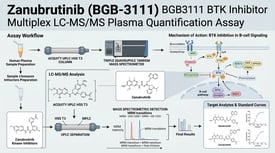
Bruton’s tyrosine kinase (BTK) is a non-receptor tyrosine kinase belonging to the Tec family, and it serves as a critical component of the B-cell receptor (BCR) signaling pathway. BTK is essential for the development, differentiation, and survival of B-lymphocytes. Upon BCR activation, BTK is recruited to the plasma membrane and phosphorylated by Lyn or Syk kinases. Once active, BTK phosphorylates phospholipase C-gamma-2 (PLC-gamma-2), which in turn triggers the release of intracellular calcium and the activation of downstream transcription factors such as NF-kappaB and NFAT. This signaling cascade is vital for B-cell proliferation and the production of antibodies. Because BTK is primarily expressed in B-cells and myeloid cells but absent in T-cells and natural killer cells, it represents a highly specific target for treating B-cell-related malignancies and autoimmune disorders.
The clinical success of BTK inhibitors has transformed the treatment landscape for several hematologic malignancies. The first-in-class inhibitor, ibrutinib, received landmark approval for the treatment of chronic lymphocytic leukemia (CLL), mantle cell lymphoma (MCL), and Waldenström’s macroglobulinemia. Beyond oncology, BTK inhibitors are being extensively investigated for autoimmune diseases such as rheumatoid arthritis, systemic lupus erythematosus, and multiple sclerosis, where BTK-mediated signaling in B-cells and mast cells contributes to pathological inflammation. The ability to selectively dampen B-cell activity without causing broad immunosuppression makes BTK an attractive target for long-term management of chronic inflammatory conditions. BTK inhibitors are generally classified into two categories based on their mechanism of binding: irreversible (covalent) and reversible (non-covalent) inhibitors. Irreversible inhibitors, including ibrutinib, acalabrutinib, and zanubrutinib, function by forming a covalent bond with the cysteine residue at position 481 (C481) in the ATP-binding pocket of the enzyme.
While highly effective, these first- and second-generation covalent inhibitors can lead to resistance, most commonly through a C481S mutation that prevents covalent binding. This challenge led to the development of third-generation, non-covalent (reversible) BTK inhibitors like pirtobrutinib. These newer agents do not require the C481 residue for binding and have shown remarkable efficacy in patients who have failed previous covalent BTK inhibitor therapy. Despite their efficacy, BTK inhibitors are associated with specific adverse effects, such as atrial fibrillation, hypertension, and increased bleeding risk, which are thought to result from off-target inhibition of other kinases like TEC, EGFR, or ITK. Second-generation inhibitors like acalabrutinib were designed to be more selective for BTK to minimize these toxicities. Current research is also exploring combination strategies, such as pairing BTK inhibitors with BCL-2 inhibitors (e.g., venetoclax) or anti-CD20 monoclonal antibodies, to achieve deeper and more durable responses.
Furthermore, the development of BTK-targeting PROTACs (proteolysis-targeting chimeras) is an emerging area that aims to overcome resistance by degrading the BTK protein entirely, rather than just inhibiting its kinase activity. As the field evolves, the focus remains on improving selectivity, overcoming resistance, and expanding the therapeutic reach into autoimmune and neuro-inflammatory diseases.