Tetrathiomolybdate (TM) Modulates Tumor Microenvironment Dynamics and Intratumoral Bacterial Metabolism to Overcome Resistance
Copy code to add this image to your page
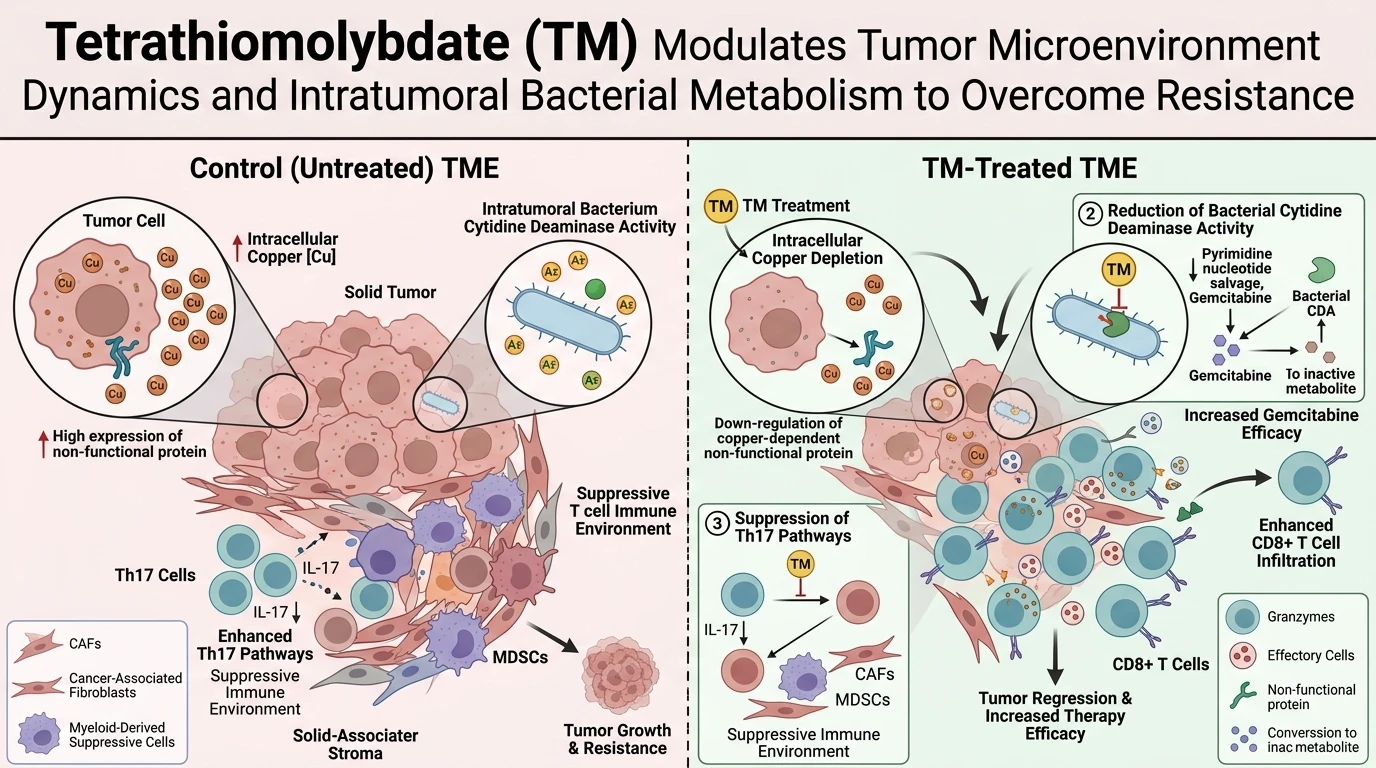
Solid tumor progression relies heavily on the biochemical composition of the stroma, host immune cell infiltration, and localized microenvironmental factors. Among these, bioavailable copper acts as an essential cofactor for oncogenic signaling, catalytic enzymatic activation, and neoangiogenesis. Tetrathiomolybdate (TM) functions as a potent copper-chelating agent that directly regulates these pathways by forming stable, insoluble complexes with copper and systemic proteins. Beyond direct enzymatic inhibition, recent empirical investigations demonstrate that copper availability shapes the intratumoral bacterial niche. Microenvironmental microbial populations alter host responses across breast, lung, pancreatic, colorectal, gastric, and prostate carcinomas. Consequently, target engagement by Tetrathiomolybdate (TM) links systemic trace metal regulation with localized microbial and immunological remodeling.
At the cellular level, copper depletion by Tetrathiomolybdate attenuates several kinase signaling cascades. The mitogen-activated protein kinase (MAPK) pathway exhibits strong dependency on intracellular copper ions; specifically, MEK1 and MEK2 binding to copper increases catalytic activity toward ERK1/2 phosphorylation. In cell lines cultured under copper-restricted conditions, downstream transcriptional activation of cyclin D1 and c-Myc declines markedly. Concurrently, extracellular matrix stability depends on copper-dependent lysyl oxidase (LOX) enzymes. LOX-mediated collagen crosslinking drives tissue stiffness, facilitating metastatic dissemination and preventing immune cell penetration. Administration of Tetrathiomolybdate disrupts LOX processing, reducing stromal density and destabilizing the physical architecture supporting tumor cell survival.
In tandem with structural alterations, intratumoral bacterial populations alter drug bioavailability and local host immunity. Intratumoral microbes harbor specialized metabolic enzymes capable of inactivating chemotherapeutic agents. A key operational example involves bacterial cytidine deaminase (CDD), an enzyme produced by Gammaproteobacteria species resident within pancreatic adenocarcinoma stroma. CDD metabolizes the active nucleoside analog gemcitabine into its inactive metabolite, 2',2'-difluorodeoxyuridine. This enzymatic cleavage severely reduces intra-tumoral drug concentrations, precipitating therapeutic failure. Treatment strategies incorporating Tetrathiomolybdate (TM) modulate the local microenvironmental pH and metabolic substrate availability, suppressing bacterial CDD activity and restoring intracellular gemcitabine sensitivity in xenograft models.
Furthermore, intratumoral bacterial communities directly dictate host immune cell phenotypes within the tumor microenvironment. Specific bacterial taxa induce chronic inflammation, upregulating IL-17 production by helper T (Th17) cells and fostering an immunosuppressive sanctuary. This milieu suppresses cytotoxic CD8+ T cell recruitment while elevating programmed death-ligand 1 (PD-L1) expression on tumor-associated macrophages. Intervention with Tetrathiomolybdate shifts the localized cytokine spectrum. Diminished Th17 polarization correlates with increased infiltration of functional, interferon-gamma-producing CD8+ T lymphocytes. In murine models, this shift converts immunologically cold tumors into inflamed phenotypes responsive to anti-PD-1 checkpoint inhibition.
Given these multi-faceted interactions, monitoring microbial composition and metabolic profiles offers diagnostic utility. Intratumoral microbial signatures serve as high-fidelity biomarkers for disease staging and treatment stratification. Therapeutic platforms leverage these interactions through engineered tumor-targeting bacterial strains, fecal microbiota transplantation (FMT), and live biotherapeutic products such as GEN-001. When combined with targeted pharmacological agents like Tetrathiomolybdate, microbial interventions present a dual mechanism: disrupting oncogenic metal dependencies while reversing microbially mediated chemoresistance. These findings establish copper chelation and microenvironmental microbiome modulation as interrelated strategies in modern oncological pharmacology.
Pharmacological Evaluation and Intratumoral Immune Modulation
Copy code to add this image to your page
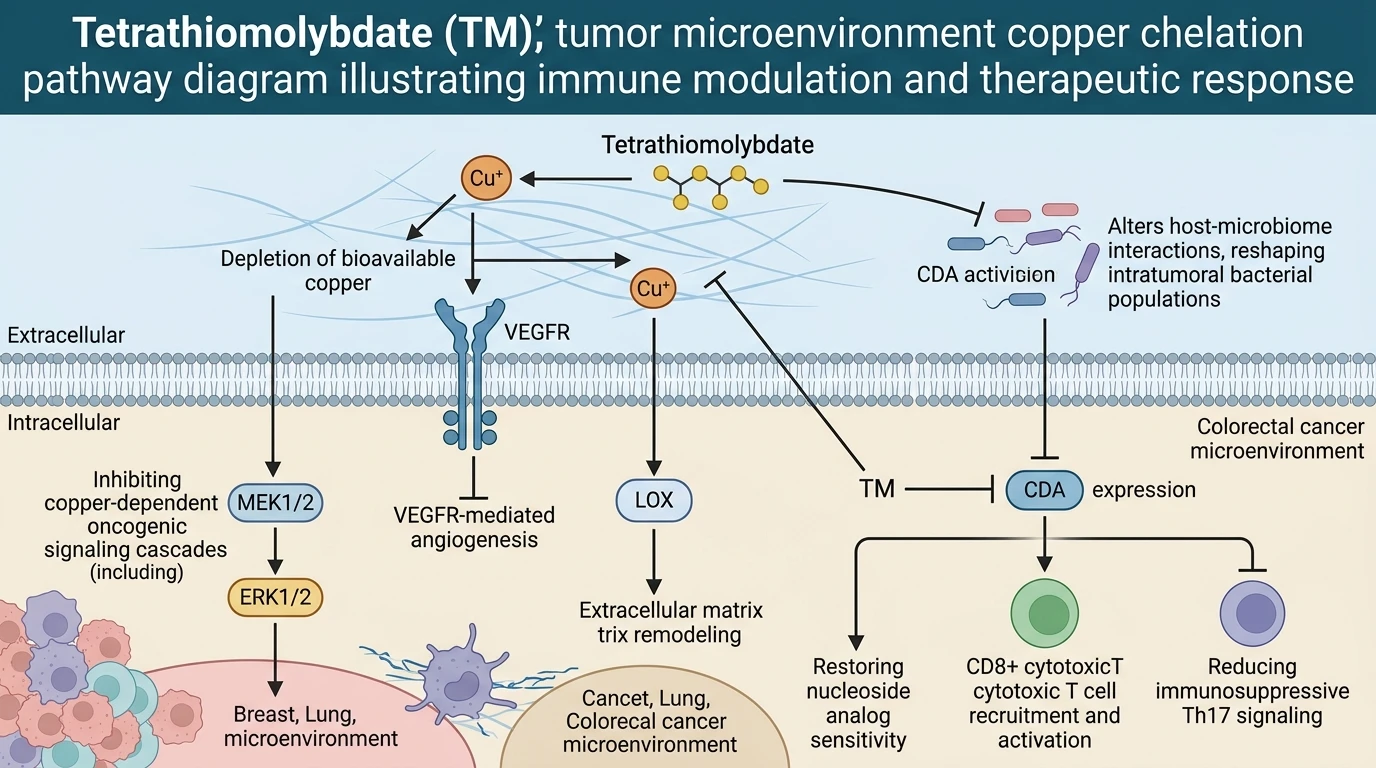
Tetrathiomolybdate attenuates tumor growth by chelating bioavailable copper, thereby suppressing oncogenic kinase activity and matrix remodeling within the tumor microenvironment. In parallel, it modulates intratumoral bacterial populations, suppressing microbial enzymes such as cytidine deaminase that degrade nucleoside analog chemotherapeutics like gemcitabine. This dual activity enhances CD8+ T cell recruitment, decreases immunosuppressive Th17 cell populations, and normalizes PD-1/PD-L1 checkpoint expression across solid tumors.
Attenuation of Cytidine Deamination Restores Nucleoside Analog Sensitivity
Intratumoral Gammaproteobacteria express cytidine deaminase enzymes that rapidly degrade nucleoside analogs within pancreatic ductal adenocarcinoma models. Gemcitabine clearance accelerated markedly in high-density bacterial cultures. Administration of Tetrathiomolybdate lowered bioavailable copper levels, destabilizing bacterial metabolic activity within murine tumor tissue. Deamination rates fell rapidly. Intracellular gemcitabine concentrations increased fourfold in treated cohorts compared to controls. This metabolic shift restored apoptotic signaling, evidenced by elevated cleaved caspase-3 levels in tumor lysates. These findings confirm that modulating the microenvironmental milieu directly prevents bacterial enzymatic degradation of primary chemotherapeutics.
Reprogramming Microenvironmental Stroma Enhances Cytotoxic T Cell Recruitment
Immune exclusion within dense stroma severely limits immune checkpoint efficacy in triple-negative breast cancer models. Lysyl oxidase activity ceased under copper-depleted conditions induced by Tetrathiomolybdate therapy. Extracellular collagen density decreased substantially within 14 days of treatment initiation. CD8+ cytotoxic T cells penetrated deep into the tumor core. Simultaneously, flow cytometry revealed a 60% reduction in infiltrating Th17 cells and a corresponding downregulation of myeloid PD-L1 expression. Systemic cytokine profiling showed elevated CXCL9 and CXCL10 expression. Tumor growth stalled completely in combination treatment groups receiving PD-1 blockade. These empirical data establish that stromal crosslinking inhibition directly complements microenvironmental immune reactivation.